
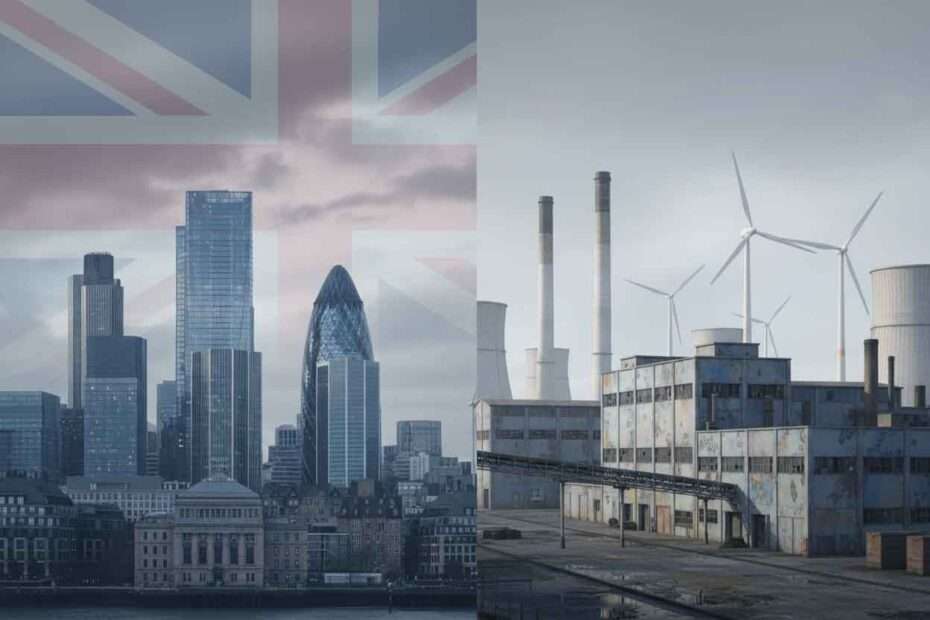
UK and the European Union: A Shared Descent into Economic Stagnation
Standing on the banks of the Thames, the glass towers of the City of London still project an image of power and continuity: polished facades, financial acumen, and the aura of an established global hub. A short mental journey across the Channel, however, takes one to the industrial regions of Germany, where smokestacks that once symbolised industrial might increasingly stand idle. On the surface, these two worlds could not be more different. One is a service-based island economy that placed an enormous political and economic bet on its departure from the European Union. The other is a manufacturing heavyweight embedded in a union of 27 states, underpinned by a single currency and layers of shared regulation.
Look more closely, though, and the distinctions soften. Behind the rhetoric, stock market rallies and headline economic indicators, a similar pattern emerges: weak growth, fraying social contracts, mounting debt and deep structural vulnerabilities. Rather than a competition between a “successful” United Kingdom and a “failing” European Union—or vice versa—what has emerged resembles a grim race to the bottom, with both sides confronting different variants of an overlapping crisis.
This article examines the core elements of that crisis: stagnating productivity, a badly managed energy transition, currency fragility, demographic decline, institutional paralysis and growing political volatility. Though the institutional arrangements and policy choices differ markedly, the underlying story is one of two economic systems each undermining its own long-term viability, albeit in distinct ways.
1. Growth Without Dynamism: The Productivity Problem
Economic growth is the basic engine of rising living standards, and its absence is the first and most important warning sign. In the United Kingdom, the sense of stagnation is increasingly tangible. Since the global financial crisis of 2008, productivity growth—the amount of output generated per hour worked—has been extraordinarily weak by historical standards.
This is not a matter of a single poor year or a cyclical downturn. For around a decade and a half, output per worker has barely moved. Over the same period, new technologies have been adopted at scale, from smartphones to cloud computing and advanced software. Yet these advances have not translated into meaningful gains in productivity.
One explanation is a chronic failure to invest. The British economy has become heavily reliant on cheap labour and rising asset prices, particularly in housing, rather than on capital investment and innovation. Instead of upgrading infrastructure, building new productive capacity or expanding high-value manufacturing, large amounts of capital have flowed into property. This has created the illusion of wealth through asset inflation, while leaving the underlying productive economy underdeveloped and fragile.
Across much of the Eurozone, the details differ but the conclusion is similar. Germany and its neighbours were long regarded as industrial powerhouses, built upon strong export sectors and highly developed supply chains. That model relied on two crucial external factors: inexpensive Russian gas and robust Chinese demand for European exports, particularly automobiles and industrial goods.
Within roughly two years, both pillars weakened dramatically. The Russian invasion of Ukraine and subsequent geopolitical rupture undermined Europe’s access to cheap pipeline gas. At the same time, Chinese demand has become less reliable as that country pursues its own rebalancing and increasingly competes directly in sectors where Europe once had a clear advantage.
The result has been a sharp deterioration in the outlook for core European industries. Industrial production in Germany has come under sustained pressure, with major chemical firms and manufacturers scaling back or relocating. This is not simply a cyclical slump but, in significant respects, a structural challenge to the foundations of the old export-led model.
Thus, on both sides of the Channel, the apparent divergence in economic structure—services-heavy Britain versus manufacturing-led Europe—conceals a common predicament: growth without genuine dynamism, and economies increasingly unable to convert technological and human potential into sustained productivity gains.
2. Brexit, Bureaucracy and Structural Paralysis
The British and European systems have each pursued different paths that now limit their ability to respond effectively to shocks. The United Kingdom has imposed significant new trade frictions upon itself through Brexit, while the European Union wrestles with the constraints of its own complex governance and regulatory architecture.
Brexit introduced new customs and regulatory barriers between the UK and its largest nearby market. For small and medium-sized British businesses that once exported to France, Germany or other EU states with minimal friction, the new regime involves added paperwork, delay and expense. Many firms that previously sold easily into the European single market now face complex declarations, certification requirements and rules-of-origin tests. Some have simply withdrawn from exporting altogether, unable to justify the administrative burden relative to the potential returns.
The erosion of these trading relationships has not occurred because the United Kingdom lacks entrepreneurial talent or productive potential. Rather, it has arisen from political decisions that have increased barriers between the UK and its closest, most natural trading partners. In essence, the country has voluntarily constrained its economic reach in the name of sovereignty, discovering belatedly how costly such constraints can be in practice.
The European Union, by contrast, faces a different form of paralysis: an inability to move decisively in the face of mounting challenges. Its decision-making structures require broad consensus across diverse nations with divergent economic interests, political cultures and levels of development. Where the UK’s problem is impulsiveness and erratic policy shifts, the EU’s challenge is rigidity and an ingrained caution that can tip into inertia.
Nowhere is this clearer than in the technology sector. While the EU has been a leader in data protection and regulatory frameworks, it has not produced an equivalent of the largest US or Chinese technology firms. There is no European counterpart to Google, Apple or the biggest social media platforms. European AI firms are emerging but operate within an environment where regulation often arrives early and heavily, sometimes before large-scale domestic industries have matured.
As a consequence, Europe often excels at setting rules for technologies largely developed elsewhere. Its internal market can be fragmented by divergent national implementation of EU directives, and entrepreneurs encounter substantial compliance burdens. The regulatory environment, while often well-intentioned, can in practice inhibit rapid experimentation and scaling, particularly relative to the United States and parts of Asia.
In summary, the UK’s version of structural constraint stems largely from self-imposed external barriers and domestic political volatility, while the EU’s arises from internal complexity, policy overreach in some areas, and the difficulty of reconciling the interests of a large bloc of member states.
3. Energy: From Security to Vulnerability
The energy crisis illustrates how strategic misjudgements can quickly metastasise into systemic risk. In both the UK and the EU, decisions taken over decades have left economies highly vulnerable to price shocks and supply interruptions.
In the United Kingdom, the liberalisation and privatisation of energy infrastructure created a fragmented system in which long-term resilience was sometimes subordinated to short-term cost savings. Gas storage capacity was significantly reduced, leaving the country exposed when global prices spiked. When wholesale prices surged, domestic energy bills followed, doubling or even tripling for many households.
This has produced a stark social choice: heating or basic consumption. Households in one of the world’s wealthiest economies have faced decisions more commonly associated with far less prosperous nations. The government intervened with large-scale subsidies to household energy bills, but this support was financed through additional borrowing. Once again, immediate stability was purchased by shifting the burden into the future.
The physical infrastructure of the UK grid is ageing, with upgrades required to integrate large volumes of renewable generation and improve reliability. Yet public finances and regulatory uncertainty have hampered timely investment.
In Germany and parts of the wider EU, the situation has been different but no less troubling. In pursuit of an ambitious energy transition and in the aftermath of the Fukushima disaster, Germany closed its nuclear power stations and doubled down on imported gas, particularly from Russia, to support its industrial base while expanding renewables.
When Russian supplies were disrupted, much of German industry was confronted with sharply higher energy costs and, in some cases, supply risks. Energy-intensive sectors such as chemicals, steel and heavy manufacturing were particularly exposed. Some firms responded by cutting production or relocating operations to jurisdictions with cheaper and more stable energy, including the United States and Asia. Once lost, such industrial capacity is rarely easy to recover.
The EU’s broader strategy, centred on rapid decarbonisation, has delivered important gains but has also introduced vulnerabilities. For industries facing both high energy costs and stringent environmental regulation, the temptation to relocate outside Europe is considerable, particularly if global competitors operate under looser standards. This so-called “carbon leakage” weakens the European industrial base without necessarily reducing global emissions.
Both systems thus find themselves constrained: the UK by a combination of underinvestment, market fragmentation and political short-termism; the EU by an ambitious, sometimes over-hasty green transition implemented in an environment of geopolitical instability. The consequences are felt in household budgets, industrial competitiveness and overall economic resilience.
4. Currencies Under Strain: The Pound and the Euro
Currencies are not merely technical instruments of exchange; they are expressions of confidence in a state’s economic and institutional robustness. Both the pound sterling and the euro have, in different ways, been placed under pressure in recent years.
In 2022, sterling came precariously close to parity with the US dollar, an event that, beyond its symbolic weight, signalled acute market anxiety. The episode was triggered by a fiscal package built on unfunded tax cuts and increased borrowing at a time of elevated inflation and rising global interest rates. The reaction in bond markets was extreme: yields spiked, the cost of government borrowing leapt, and the Bank of England was forced to intervene to stabilise the situation.
The incident revealed how fragile the perception of the UK as a safe, predictable destination for capital had become. While the pound has since regained some ground, the underlying structural issues—persistent current account deficits, reliance on foreign capital and political volatility—remain unresolved. The UK’s ability to fund its external deficits depends on continued confidence from international investors. Should that confidence weaken more broadly, a deeper sterling crisis cannot be ruled out.
The euro faces a different but equally serious set of challenges. It is a single currency uniting economies that differ markedly in their productivity levels, fiscal positions and economic structures. The so-called “frugal” north, including Germany and the Netherlands, shares a monetary framework with highly indebted, slower-growing states in the south such as Italy and Greece.
For many years, Germany’s strength allowed it to act as an implicit guarantor of the system, supplying industrial output and enjoying large trade surpluses that helped offset imbalances elsewhere. As Germany’s own industrial model comes under stress, its capacity to shoulder that role diminishes.
Monetary policy compounds the difficulty. The European Central Bank sets a single policy rate for the entire Eurozone. This inevitably leads to tensions. A policy stance tight enough to contain inflation in the stronger economies can inflict severe strain on more indebted members, where higher rates increase debt-servicing costs and risk destabilising housing markets and banking systems. Conversely, looser policy suitable for the weaker economies can fuel inflationary pressures in the stronger ones.
Absent full fiscal union or more complete risk-sharing mechanisms, the eurozone remains structurally exposed to such internal contradictions. The question is not whether these tensions exist—they are well documented—but whether political will can be mustered to undertake further integration, and whether electorates would accept it.
Against a backdrop of global uncertainty, both the pound and the euro have seen their relative weight in global reserves challenged by a renewed flight to the US dollar. The euro, once viewed as a contender for co-reserve status, has failed to expand its share meaningfully. Sterling, while still a reserve currency, represents a much smaller portion of global holdings and is more vulnerable to shocks.
Losing or eroding reserve status would sharply reduce a currency-issuing state’s capacity to finance deficits without severe inflationary repercussions. For the UK in particular, a large, sudden loss of confidence in sterling would threaten its capacity to import essential goods such as food and energy at affordable prices.
5. The Fraying Social Contract
Underlying these economic dynamics is a deeper erosion of the post-war social contract—the implicit bargain that citizens who work, pay taxes and comply with the law will enjoy a predictable, gradually improving standard of living and reliable public services.
In the United Kingdom, this erosion is highly visible. Public services, notably the National Health Service (NHS), are under acute strain. Waiting lists for treatments and operations have risen into the millions, and emergency services often face lengthy delays. While some of this reflects demographic pressures and the pandemic’s legacy, it also stems from long-term funding and capacity issues in an economy that has struggled to generate the growth required to support a comprehensive welfare state.
At the same time, income and wealth disparities have widened. Large concentrations of wealth in London and the South-East contrast sharply with more deprived regions, some of which resemble parts of Central and Eastern Europe in the immediate post-communist period rather than a leading G7 member. Real wages, adjusted for inflation, have stagnated or fallen over a decade and a half, producing a sense among many workers that efforts are no longer rewarded by materially better lives.
Industrial action across sectors—teachers, nurses, transport workers—has reflected not solely disputes over pay but a deeper frustration with declining living standards and a perceived lack of opportunity. The housing market compounds this sense of exclusion. For many younger people, without substantial family assistance, home ownership has become increasingly unrealistic, given the ratio of prices to average incomes. This entrenches a class of permanent renters, often with limited security and constrained capacity to build capital over time.
On the European side, the breach of the social contract often centres on expectations of security and predictability. The post-war European model offered relatively high taxes in exchange for extensive social protections, strong public services and stable pensions. As demographic realities have shifted and fiscal pressures mounted, the sustainability of this model has come into question.
Retirement systems are particularly exposed. In countries such as France and Italy, attempts to raise retirement ages or reform pensions have provoked large-scale protests and social unrest. These reactions are not simply about incremental changes to statutory ages; they reflect a widespread recognition that the promises made in prior decades may no longer be fully deliverable. The mathematics of ageing populations and slowing growth does not easily support the continuation of generous, pay-as-you-go pension systems without either significantly higher taxes or reduced benefits.
Germany faces its own acute demographic challenges, with a shrinking working-age population and growing dependency ratios. The need for migrant labour to sustain economic output and tax bases collides with mounting political resistance to high levels of immigration. As across much of Europe, this tension fuels support for parties critical of the European project and sceptical of further integration or openness.
In both the UK and the EU, therefore, citizens increasingly sense that the institutions they were taught to rely upon may no longer be capable of fulfilling past commitments. This breeds cynicism, disengagement and, at times, volatile populist movements that complicate coherent long-term policymaking.
6. Industry, Services and the Risk of De‑industrialisation
The long-standing distinction between a service-oriented UK and a manufacturing-oriented EU is blurring, but the risks associated with each model have become more apparent.
German industry, particularly the automotive sector, once embodied European industrial strength. Vehicles branded “Made in Germany” were synonymous with engineering excellence and reliability. Supply chains spanning multiple member states provided employment and added value from Central Europe to the Iberian Peninsula.
However, the rapid shift towards electric vehicles (EVs) and software-centric automotive design has allowed new entrants, particularly from China, to compete aggressively. Chinese manufacturers benefit from integrated battery supply chains, large-scale domestic markets and strong state support. Their EVs often arrive in Europe with competitive pricing and advanced software features. European manufacturers, having initially underestimated both Tesla and Chinese competitors, now find themselves forced to catch up in a rapidly changing market.
Calls for tariffs on imported vehicles and other protective measures signal underlying competitive weakness. While such measures may provide temporary relief, they do not substitute for the innovation and cost competitiveness necessary for long-term success. They may also provoke retaliatory action and distort trade flows.
The UK, meanwhile, has already experienced a significant decline in its domestic car manufacturing base. Much of what remains is owned by foreign multinational firms. In earlier decades, the UK consciously shifted towards services, banking, finance, consulting and higher education, under the assumption that advanced economies could thrive predominantly on such activities.
Services are, however, often more sensitive to global economic sentiment than physical manufacturing. When international conditions tighten, discretionary services—expensive legal advice, premium education, high-end consulting—are frequently among the first expenditures to be reduced. A services-led model can thus offer substantial income in favourable global conditions but may leave the economy particularly vulnerable during downturns.
Both the UK and the EU, therefore, face versions of de-industrialisation, whether through the loss of factories to jurisdictions with cheaper energy and labour or through the long-term hollowing out of domestic manufacturing capacities. In a world where geopolitical tensions and supply chain security are growing considerations, excessive reliance on foreign production and imported goods adds a further layer of risk.
7. Debt, Housing and “Zombie” Economies
The era of exceptionally low interest rates that followed the global financial crisis encouraged both households and corporations to take on high levels of debt. For a time, the servicing of that debt appeared manageable. With the return of higher inflation and interest rates, however, repayment obligations have become significantly more onerous.
In both the UK and the EU, many firms became so-called “zombie companies”, only able to service their existing liabilities because borrowing was cheap. As rates have risen, the viability of these firms has come under question. A wave of corporate failures would push up unemployment, depress tax receipts and increase demands on social safety nets, thereby widening fiscal deficits and adding to public debt burdens.
Housing markets, particularly in the UK, sit at the heart of this dynamic. British economic life has been deeply entwined with property for decades. Policies that inflate or sustain house prices can create a sense of prosperity for those who own homes, but they also raise entry barriers for those who do not, and they tie large portions of the financial system to property valuations.
Higher mortgage rates have lifted monthly payments substantially for many households, absorbing income that would otherwise circulate through the broader economy. Money directed to servicing debt on highly valued housing stock leaves less room for discretionary spending, putting pressure on local businesses and employment. At the same time, policymakers are wary of a substantial fall in house prices because such a decline could erode the balance sheets of banks and households simultaneously. This creates a form of policy trap: prices must not rise too quickly, but they must not fall too far either. The result can be a frozen market, with reduced transactions, constrained new construction, and a slower adjustment process that prolongs economic weakness.
In parts of the Eurozone, housing dynamics are different but still problematic. In Germany and other traditionally renter-heavy systems, large property companies have struggled with higher financing costs and regulatory constraints. In some Scandinavian and Benelux countries, household indebtedness is high, rendering them vulnerable to interest rate increases. Meanwhile, shortages of affordable housing in key cities damage labour mobility and make it harder to attract and retain the skilled workers necessary for industrial renewal and tech-sector growth.
When combined with substantial public debt in several member states, these housing and corporate vulnerabilities contribute to a broader sense of fragility. Policymakers face difficult trade-offs: tighten monetary policy to control inflation and risk widespread defaults, or loosen too early and allow inflation to erode real incomes and savings further.
8. Demographics, Migration and the Future Workforce
Perhaps the most intractable long-term challenge facing both the UK and the EU is demographic change. Ageing populations, low fertility rates and changing patterns of migration are reshaping labour markets and social systems across the continent.
Many European countries now have fertility rates far below replacement levels. Italy and Spain, for instance, record some of the lowest birth rates in the world. The United Kingdom’s birth rate has also fallen, although it remains somewhat higher than in parts of southern Europe. High housing costs, expensive childcare and uncertain economic prospects deter many younger people from forming families or having children as early or in the numbers their parents did.
As populations age, the ratio of working-age adults to retirees declines. This intensifies fiscal pressures because smaller cohorts of workers must support larger cohorts of pensioners and older citizens who require more healthcare and social care. Without significant productivity gains or policy changes, either benefits must be reduced, retirement ages increased or tax burdens raised, each of which carries political and social risks.
Migration has, to date, helped alleviate labour shortages in some sectors and countries. Germany, in particular, has relied heavily on migrant workers in key industries and services. However, immigration is politically contentious in many member states, and managing it in a cohesive way across the EU has proved enormously difficult. Political movements critical of high levels of migration have reshaped the electoral landscape in several countries, complicating attempts to forge coherent long-term strategies.
The UK’s position is distinct in that Brexit explicitly sought to regain control over immigration policy, especially from the EU. Nonetheless, certain sectors—healthcare, agriculture, hospitality—have continued to rely on migrant labour. Achieving a balance that satisfies economic requirements while addressing public concerns about pressure on services and integration remains a major unresolved issue.
Demographic trends also interact with education and skills. Both the UK and the EU still house world-class universities and research institutions. Yet there is considerable evidence of “brain drain”, as highly skilled graduates and professionals relocate to the United States, Canada, or parts of Asia where they perceive better opportunities, higher rewards and more dynamic innovation ecosystems. This leakage of human capital weakens long-term growth potential and undermines investments in education and training made by European states.
9. Institutions, Risk Culture and Political Capacity
Economic outcomes are shaped not only by policy choices and structural conditions but also by institutional cultures and attitudes towards risk and failure.
In the UK and much of the EU, business failure often carries substantial social stigma and legal consequences. Bankruptcy regimes tend to be more punitive than in the United States, where entrepreneurial risk-taking and even failure are more likely to be considered part of a normal innovation process. This difference affects the willingness of individuals to launch new ventures, experiment with untested models and attract risk capital.
Culturally, there is often a strong preference for stability and risk aversion in European policymaking. The “precautionary principle” in regulation, while designed to protect citizens and the environment, can slow adoption of new technologies and processes. By contrast, the American regulatory approach has typically been more permissive, allowing rapid experimentation followed by ex post adjustment when problems are identified.
Domestic political systems in the UK and the EU have also shown signs of strain. The United Kingdom has experienced frequent changes of leadership in recent years, making it harder to sustain consistent policy over the medium term. Market reactions to policy missteps have underscored how little room there is for fiscal or monetary error.
Within the EU, coalition governments, fragmented parliaments and the need to align national and European-level priorities can slow decision-making. Strategic initiatives invariably require agreement between multiple states and institutions, delaying responses to fast-moving crises. Leadership figures across the bloc often encounter intense domestic opposition when attempting significant reforms, especially those related to pensions, labour markets or environmental policy.
This combination of political fragility, cautious institutional cultures and an often sceptical or disillusioned electorate constrains the capacity of both the UK and the EU to undertake the substantial structural reforms many economists argue are necessary.
10. Who Faces the Greater Risk?
Assessing which is “doing worse” economically—the UK or the EU—requires distinguishing between acute volatility and deep structural fragility.
The United Kingdom currently faces a more immediate and visible crisis. It is a relatively small, highly open economy with its own currency, substantial external deficits and a heavy reliance on foreign capital. Inflation has been higher and more persistent than in some eurozone peers, and the decline in living standards more abrupt. Brexit has amplified existing vulnerabilities, increasing transaction costs with major trading partners and complicating supply chains. The probability of a sudden sterling or gilt-market shock is therefore non-trivial.
Yet the UK retains important advantages. It has full control over its monetary policy, including the option of currency depreciation as an adjustment mechanism. Its political system, though unstable in recent years, remains unitary and capable in principle of implementing rapid policy shifts if a strong mandate emerges. Structural reforms to planning, regulation and taxation, while politically difficult, are technically feasible without the need to secure consent from multiple sovereign states.
The European Union, by contrast, enjoys the scale advantages of a vast internal market, diversified industrial and agricultural bases, and a large combined population. It is less vulnerable to certain forms of acute crisis precisely because its size and diversity provide buffers. However, its challenges are arguably more entrenched.
The euro’s design, without a fully centralised fiscal authority or deep risk-sharing across member states, remains incomplete. Demographic decline is advanced in several key economies, and political appetite for further integration is limited. The energy transition, implemented unevenly and under conditions of geopolitical tension, has exposed industrial vulnerabilities that will take many years to address.
From this perspective, the UK resembles a damaged but potentially agile vessel: battered by storms of its own making but still, in theory, capable of turning sharply if leadership and public consent align. The EU is more akin to a very large ship on a difficult course, its steering mechanisms complex and slow to respond, its ability to change direction constrained by multiple competing interests.
It is therefore entirely possible that the UK experiences a sharper, earlier crisis—a dramatic market event or a pronounced recession—while the EU endures a slower, more cumulative erosion of economic strength, culminating in a more profound reconfiguration of its institutions or even its membership.
11. Adapting to the New Reality
Both the United Kingdom and the European Union are entering what might be described as an era of correction. Decades of accumulating imbalances—ranging from debt and housing costs to demographic and industrial policy—must be addressed. The process is unlikely to be painless.
For citizens, the central question is less which jurisdiction performs marginally better in GDP terms over the next year or two, and more how to navigate an environment in which past assumptions about ever-rising living standards and stable institutions no longer hold in the same way.
On a systemic level, both entities must wrestle with similar imperatives:
- Restoring or enhancing productivity growth through investment in infrastructure, education, digital networks and innovation.
- Managing the energy transition in a way that reduces emissions without permanently undermining industrial capacity or social cohesion.
- Reforming housing and land-use policies to provide affordable living conditions without destabilising financial systems heavily exposed to property.
- Addressing demographic decline through a mixture of family policy, migration management and later-life employment, while maintaining social solidarity.
- Updating institutional and regulatory frameworks to support entrepreneurship and risk-taking, rather than unintentionally stifling them.
The paths the UK and the EU choose will diverge in many details, reflecting different histories, political cultures and legal structures. Yet the underlying tests—economic, demographic and geopolitical—are shared. The period ahead is unlikely to produce the comfortable, linear progress that defined parts of the late 20th century. Instead, both polities will have to adjust to a world in which energy is more constrained, growth harder to achieve, populations older and global power more contested.
In that context, the debate over whether the UK or the EU is “doing worse” may be less meaningful than recognising how interlinked their fortunes still are, despite political separation. Trade, investment, security and migration bind them together in ways that no referendum or treaty alone can wholly undo.
What matters most is not who reaches the bottom first, but which system can adapt sufficiently to avoid a more fundamental breakdown in its economic and political order. On that measure, neither side currently has the luxury of complacency.
Frequently Asked Questions (FAQs)
1. What are the primary economic challenges currently facing the UK and the EU?
Both the UK and the EU are grappling with significant economic headwinds, though the specific manifestations differ. The UK faces persistent low productivity growth, exacerbated by the trade barriers introduced post-Brexit, leading to higher costs and administrative burdens for businesses. Its energy market has been criticised for privatisation failures, resulting in high household bills and underinvestment in infrastructure. The EU, particularly Germany, is contending with the collapse of its previous industrial model, which relied on cheap Russian energy and robust Chinese demand. Both regions are experiencing currency vulnerabilities, with the pound showing susceptibility to market shocks and the euro facing structural tensions due to its single currency framework across diverse economies.
2. How has Brexit impacted the UK’s economic stability compared to the EU’s challenges?
Brexit has introduced self-inflicted economic wounds for the UK, primarily through new trade barriers with its largest market, the EU. This has increased costs and paperwork for businesses, contributing to a decline in exports and overall economic growth. While the UK retains control over its monetary policy and has a centralised government, allowing for potentially swifter policy changes, Brexit acts as a constant multiplier on other economic problems. In contrast, the EU’s challenges are more structural and stem from its complex governance, the inherent tensions of a single currency across diverse economies, and a cautious regulatory environment that can stifle innovation.
3. What role does energy policy play in the current economic difficulties of both regions?
Energy policy is a critical factor in the economic struggles of both the UK and the EU. The UK’s energy market, marked by privatisation and a lack of long-term planning, led to reduced gas storage capacity and exposed the country to volatile global prices, resulting in soaring household energy bills. Germany, within the EU, made a strategic error by shutting down nuclear power plants and increasing reliance on Russian gas, which became a major vulnerability when supplies were cut. This has led to de-industrialisation as energy-intensive businesses relocate. Both regions are struggling with the transition to green energy, with the UK facing grid connection issues and planning delays, while the EU’s ambitious targets risk driving industries to countries with less stringent environmental regulations.
4. How do demographic trends and social contracts contribute to the economic outlook?
Demographic trends, particularly ageing populations and declining birth rates, pose significant long-term challenges for both the UK and the EU. These trends strain public services like healthcare and pension systems, as fewer working-age individuals support a growing number of retirees. In the UK, the social contract is fraying due to crumbling public services, stagnant real wages, and an unaffordable housing market, leading to widespread frustration. In the EU, the crisis is fuelled by a sense of betrayal regarding the promise of high security in exchange for high taxes, with pension systems facing mathematical limits. Migration is a potential solution to labour shortages, but it remains a highly contentious political issue in both regions.
5. What are the potential long-term outcomes for the UK and the EU given these economic challenges?
The long-term outcomes for the UK and the EU are uncertain but point towards significant adjustments. The UK, being smaller and more exposed, faces a higher risk of acute financial events. However, its centralised government and independent central bank theoretically allow for quicker policy pivots, potentially emerging as a smaller but functional nation after a period of intense pain. The EU, while more resilient to sudden shocks due to its size, faces deeper, more existential structural issues embedded in its design, such as the single currency without a unified fiscal policy and intractable demographic problems. This could lead to a slower, more profound erosion of economic strength and potentially even fragmentation if political will for deeper integration or necessary reforms cannot be found.