

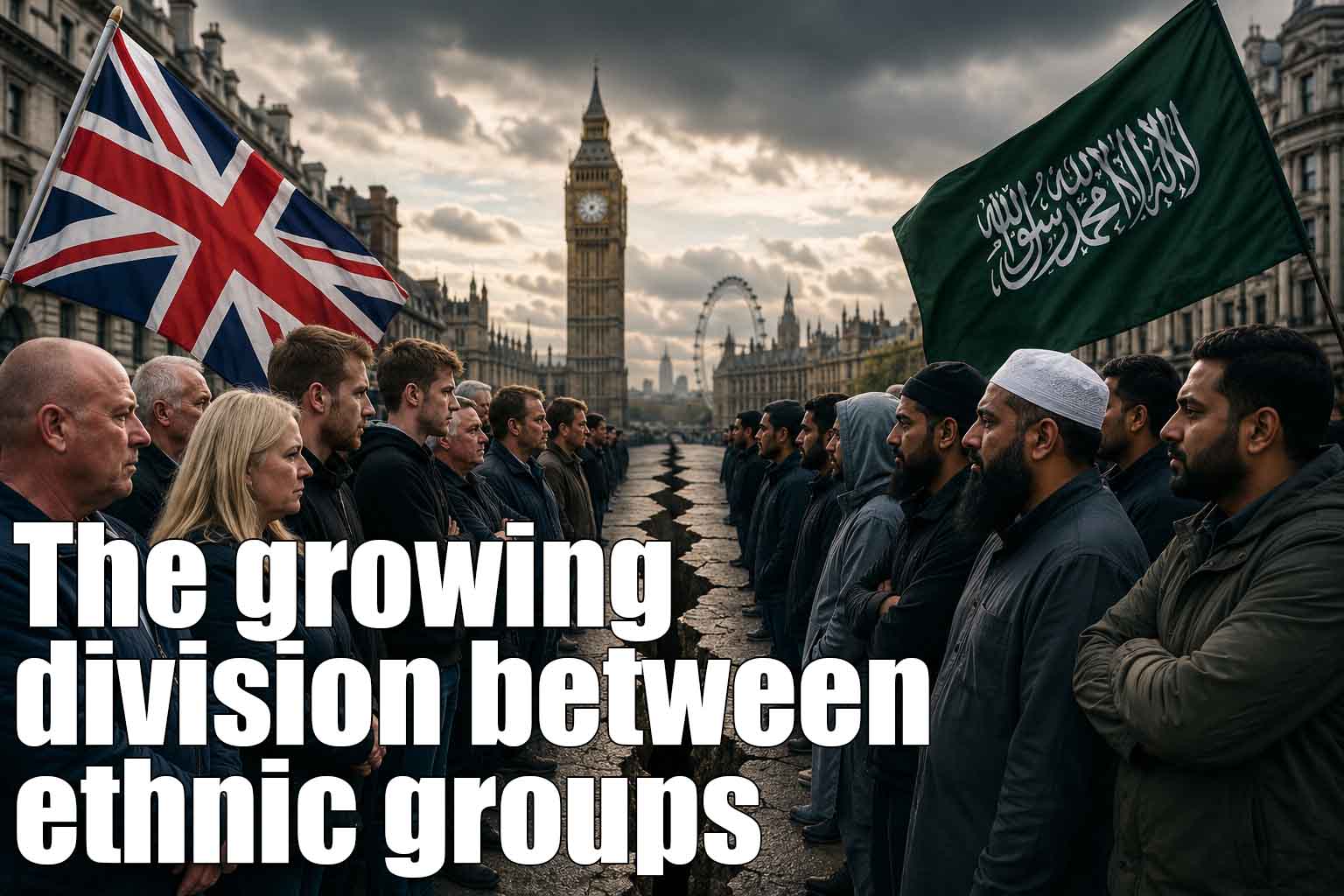
The growing division between ethnic groups
Free Speech, Equal Justice and the Growing Crisis of Public Confidence in Britain
Britain has long prided itself on being a nation governed by the rule of law, freedom of expression and equality before the courts. Yet an increasing number of people believe these principles are being applied inconsistently, particularly in matters involving religion, immigration and public order. Whether these perceptions are entirely justified is almost beside the point; the fact that they are widely held is itself becoming a serious challenge for social cohesion.
Across the country, concerns are growing that the authorities have become more focused on avoiding controversy than upholding fundamental freedoms. Among the most contentious issues is the treatment of Christian street preachers and public expressions of faith.
Many Christians argue that they are increasingly challenged, moved on or investigated by police officers whilst engaging in activities that are entirely lawful, such as reading from the Bible, preaching in public spaces or expressing traditional Christian beliefs. In numerous high-profile cases, interventions have followed complaints from members of the public who claim to have been offended by what was said.
Critics argue that this represents a dangerous shift away from the principle of free expression. In a democratic society, individuals have the right to express religious beliefs, even when those beliefs are unpopular, controversial or offensive to others. The right to free speech has little meaning if it only protects views that everyone agrees with.
A particularly troubling concern is the perception that the police are too willing to restrict lawful speech in order to placate those threatening disruption. If a peaceful speaker is silenced because others object to their presence, then responsibility for maintaining order has effectively been transferred from the authorities to the most vocal complainants. This creates what civil liberties campaigners often describe as a “heckler’s veto”, whereby those willing to cause disorder gain influence over what others may lawfully say.
Such concerns are not limited to Christianity. The principle applies equally to all citizens regardless of faith, ethnicity or political belief. A Muslim preacher, a Christian evangelist, a secular campaigner or a political activist should all enjoy the same protection under the law. Equally, those who threaten, intimidate or engage in violence should face the same legal consequences irrespective of their background.
The issue becomes even more serious when public confidence in impartial policing begins to erode. A growing number of people believe that some communities receive more favourable treatment than others. Whether these perceptions are accurate in every case is open to debate, but perceptions matter. Trust in public institutions depends not only on fairness but on the visible appearance of fairness.
History demonstrates that social stability relies upon a shared belief that the law applies equally to everyone. Once significant sections of society conclude that justice is being administered selectively, resentment grows. That resentment can eventually manifest itself in political polarisation, social division and, in the worst cases, civil unrest.
Europe is already experiencing rising tensions surrounding immigration, identity, religion and national culture. Public frustration has contributed to the growth of populist and anti-establishment political movements across the continent. Whilst comparisons with the 1930s are often exaggerated, it would be foolish to ignore the warning signs of increasing hostility between different groups.
The solution is neither to favour minorities nor to favour majorities. It is to return to a simple and enduring principle: equal treatment under the law. Governments should protect the rights of every citizen whilst enforcing the law consistently and without fear or favour. Peaceful speech should be defended regardless of who is speaking, and unlawful behaviour should be punished regardless of who is committing it.
A free society cannot function if citizens believe that some groups are above criticism or that others may be silenced merely because their views are unpopular. Equally, it cannot function if entire communities are blamed for the actions of a minority. The rule of law requires individual responsibility, not collective guilt.
Britain’s future stability will depend upon restoring public confidence that justice is impartial, freedoms are genuinely protected and the state serves all citizens equally. If that confidence is lost, social divisions will deepen. If it is restored, the country will be far better placed to navigate the challenges of an increasingly complex and diverse society.
Much as it may be a topic that many fear to address openly, unless things change, the result could be far worse than we could possibly imagine.