

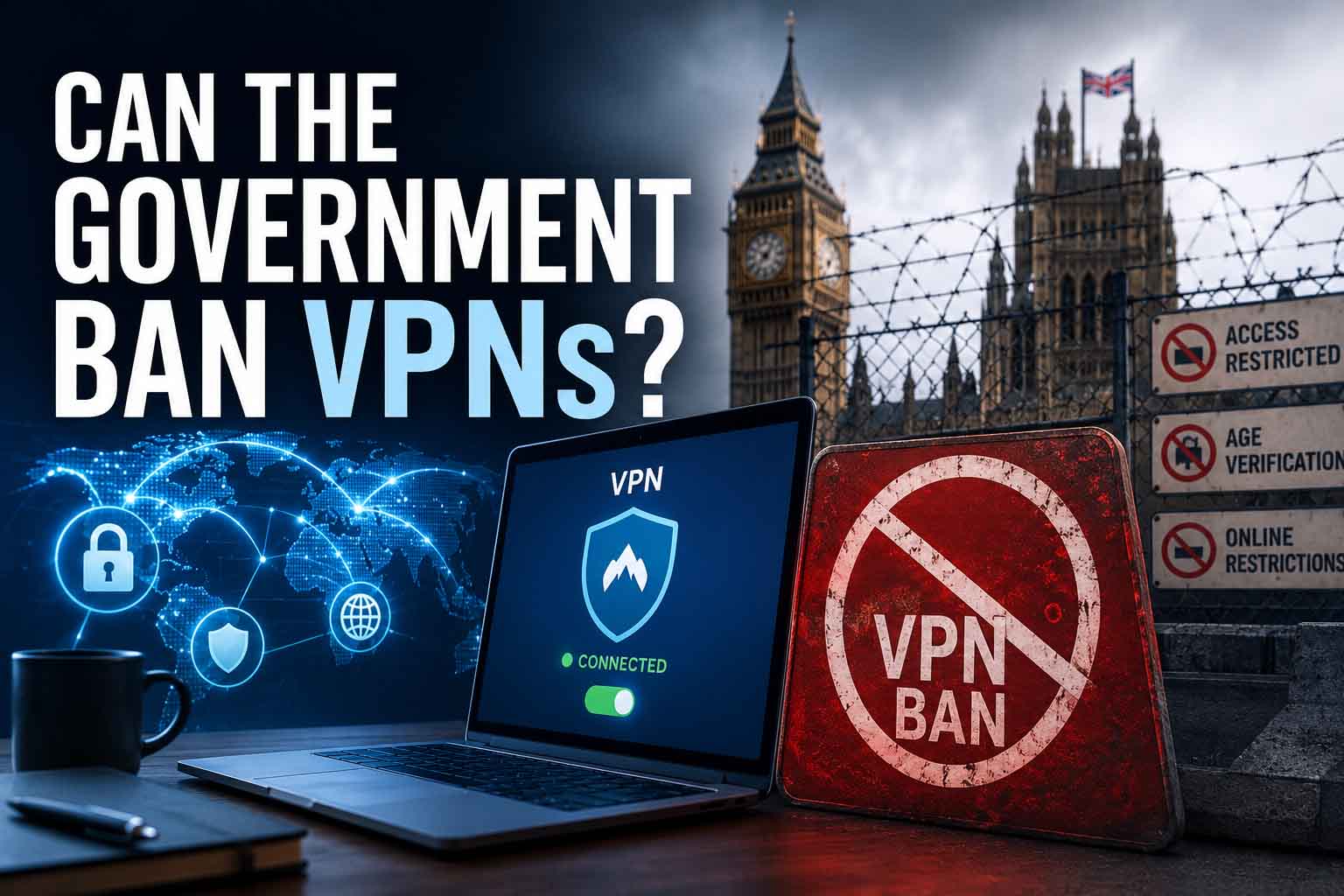
Why the Government Cannot Ban VPNs
The Limits of State Control in the Digital Age
Virtual Private Networks (VPNs) have become the latest focus of debate in Britain’s ongoing efforts to regulate online activity. Following the implementation of age-verification requirements under the Online Safety Act and wider discussions about protecting children online, some politicians and campaigners have suggested that VPNs represent a loophole that allows users to bypass restrictions.
As a result, proposals ranging from age-gating VPN services to limiting their availability have emerged in Westminster. Yet despite growing political pressure, the reality is that the UK Government cannot effectively ban VPNs in any practical sense. While ministers may be able to regulate certain providers or restrict access for some users, a comprehensive prohibition would be technically difficult, economically damaging and ultimately unenforceable.
What Is a VPN?
A VPN creates an encrypted connection between a user’s device and a remote server. This process masks the user’s IP address and prevents internet service providers, public Wi-Fi operators and other third parties from easily monitoring online activity.
VPNs are used for a wide variety of legitimate purposes. Businesses rely on them to provide secure remote access to corporate systems. Journalists use them to protect communications with sources. Cybersecurity professionals use them to test and secure networks. Ordinary members of the public use them to improve privacy and protect themselves when using public internet connections.
Importantly, VPNs remain entirely legal in the United Kingdom. There is currently no law prohibiting their use, and government ministers have repeatedly stated that there are no plans for a blanket ban.
The Technical Problem
The biggest obstacle to any VPN ban is technical.
Modern internet traffic is overwhelmingly encrypted. Secure websites, banking platforms, cloud services, video conferencing tools and countless business applications all use encryption technologies similar to those employed by VPNs.
Distinguishing VPN traffic from ordinary encrypted internet traffic is therefore far from straightforward. While some commercial VPN providers operate identifiable servers that could theoretically be blocked, many users can easily switch to self-hosted VPNs, private proxies or alternative encrypted tunnelling methods.
Even countries with far more extensive internet controls than the United Kingdom continue to struggle with VPN enforcement. Governments that devote enormous resources to internet censorship still face a constant challenge as users develop new methods of circumvention.
A UK attempt to completely eliminate VPN use would quickly become a technological arms race that the Government would be unlikely to win.
VPNs Are Essential Infrastructure
A further problem is that VPNs are not niche privacy tools used only by technology enthusiasts.
Thousands of organisations depend on VPN technology every day. Financial institutions, law firms, public bodies, healthcare providers and major corporations all use secure encrypted connections to protect sensitive information and enable remote working.
The NHS itself relies heavily on secure remote-access technologies for healthcare professionals accessing clinical systems away from their primary workplace. Secure connectivity remains a fundamental component of modern digital infrastructure.
Attempting to prohibit VPNs outright would therefore risk disrupting legitimate business activity across the economy. The Government would inevitably be forced to create exemptions for businesses, public services and critical infrastructure.
Once such exemptions exist, the distinction between legal and illegal VPN use becomes increasingly difficult to enforce.
The Enforcement Challenge
Even if Parliament enacted legislation banning consumer VPN services, enforcement would present enormous difficulties.
The Government could attempt to:
- Block known VPN websites.
- Require app stores to remove VPN applications.
- Restrict access to major commercial VPN providers.
- Order internet service providers to block known VPN servers.
However, none of these measures would eliminate VPN use.
Users could still create their own VPN servers using cloud hosting services. Open-source VPN software is freely available worldwide. Alternative privacy technologies such as encrypted proxies and decentralised networks would remain accessible. New VPN servers could be created faster than authorities could identify and block them.
In practice, any ban would largely affect casual users while determined users would continue to circumvent restrictions.
The Privacy Paradox
One unintended consequence of aggressive VPN regulation is that it may increase demand for privacy tools rather than reduce it.
Research examining the impact of the Online Safety Act found substantial increases in VPN-related discussion and interest following key regulatory milestones. Searches for VPN services rose significantly as users sought greater privacy and control over their online activity. The evidence suggests that many users were motivated by concerns about privacy and surveillance rather than simply attempting to access restricted content.
This reflects a broader reality of internet governance. When governments introduce new forms of digital regulation, some users respond by seeking technologies that enhance privacy and reduce monitoring.
As a result, efforts to restrict VPN use can sometimes encourage wider adoption.
What the Government Can Do
Although a complete VPN ban is unrealistic, the Government does possess tools to increase regulation.
Recent policy discussions have focused on proposals to age-restrict VPN services for children or require additional verification measures before access is granted. Several consultations have explored whether VPN providers should be subject to stricter compliance requirements under online safety legislation.
Such measures may create additional barriers for some users. However, they fall well short of a comprehensive ban and do not solve the fundamental technical challenges associated with enforcement.
Conclusion
The debate surrounding VPNs reflects a wider tension between online safety, privacy and technological reality.
Governments can regulate companies, impose age-verification requirements and restrict access to certain services. What they cannot realistically do is eliminate a technology that forms part of the modern internet’s core infrastructure.
VPNs are legal, widely used and deeply embedded in business, healthcare, journalism and everyday online life. Their underlying technology is readily available, globally distributed and difficult to distinguish from countless other forms of encrypted internet traffic.
For these reasons, the question is not whether the Government can make VPN use more difficult or more regulated. It can.
The real question is whether it can ban VPNs altogether.
The answer is almost certainly no.