

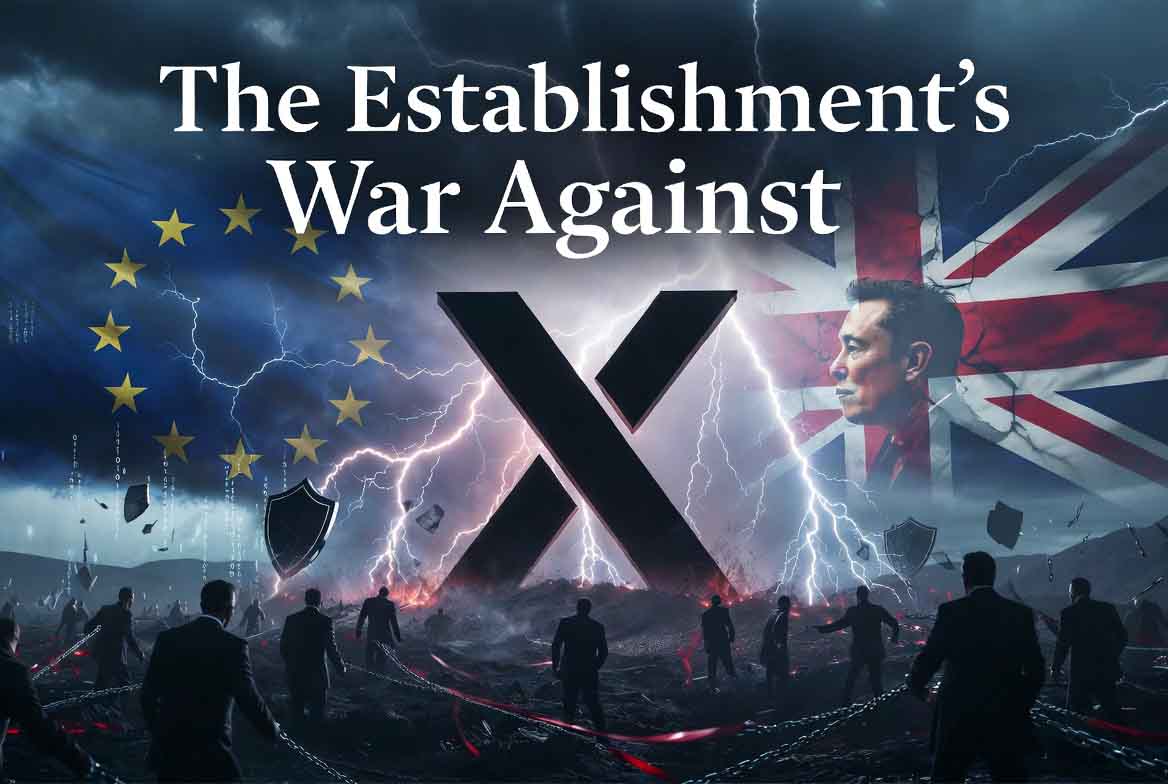
The establishment’s war against X
The Tension Between X and European Regulators: A Clash Over Free Speech and Content Control
The relationship between X (formerly Twitter) and the British government and European Union has grown increasingly strained in recent years. Far from a personal vendetta, the friction stems from fundamental differences over the balance between free expression, platform responsibility, and regulatory oversight. Under Elon Musk’s ownership, X has pursued a more permissive approach to content moderation, positioning itself as a champion of open discourse. This stance has brought it into repeated conflict with EU rules and UK legislation aimed at curbing online harms.
### The EU’s Regulatory Framework: The Digital Services Act
At the heart of the EU’s approach lies the **Digital Services Act (DSA)**, which imposes stringent obligations on very large online platforms. These include risk assessments for systemic harms, swift action against illegal content, greater transparency in advertising, and improved data access for researchers. The European Commission opened formal proceedings against X in 2023, scrutinising its handling of illegal content, disinformation, and platform design features.
In December 2025, the Commission issued its first major enforcement decision under the DSA, fining X €120 million. The penalties centred on alleged breaches of transparency rules: the shift to a paid verification system (blue checks) was deemed deceptive to users; the advertising repository was found inadequate; and access to public data for researchers was restricted. While these focus on procedural and transparency issues rather than content removal per se, broader investigations have examined X’s effectiveness in tackling hate speech, incitement, and information manipulation.
EU officials argue that platforms like X bear responsibility for mitigating risks to democracy, public safety, and vulnerable groups. Critics, including X, counter that such rules risk viewpoint discrimination, with vague definitions of “harmful” content enabling selective enforcement. Musk has publicly challenged the EU’s democratic credentials, notably questioning the appointment process for Commission President Ursula von der Leyen.
UK Concerns and the Online Safety Act
In the United Kingdom, the **Online Safety Act** places duties of care on platforms to prevent exposure to illegal content and material harmful to children. Ofcom, the regulator, has powers to impose substantial fines and, in extreme cases, block services. X has criticised the legislation for its potential to infringe free speech through bureaucratic oversight.
Tensions escalated during the 2024 riots, triggered by the Southport stabbings and amplified by widespread misinformation online. False narratives spread rapidly on X, and Musk’s own posts—warning of deeper societal divisions—drew sharp rebukes from the government, which accused the platform of insufficient action against inflammatory content. Subsequent incidents, including concerns over AI-generated imagery, have prompted further investigations and threats of stricter measures.
Prime Minister Sir Keir Starmer has repeatedly accused Musk of interfering in British politics, particularly over issues such as grooming gangs, policing, and immigration. Musk’s vocal criticism of the government, including references to “two-tier policing,” has heightened the sense of confrontation.
Underlying Causes and Broader Implications
The disputes reflect deeper philosophical divides. Pre-Musk Twitter was more accommodating of government requests for content moderation. X’s changes—reduced reliance on traditional trust and safety teams, emphasis on Community Notes, and greater transparency—have disrupted established norms. Governments, facing pressure over public order, elections, and social cohesion, view unfiltered platforms as vectors for division and unrest. X maintains that excessive moderation chills legitimate debate and that sunlight through open discourse is the better remedy.
This is not unique to X; other platforms face DSA scrutiny. However, X’s high profile and Musk’s willingness to engage directly with political controversies have made it a focal point. Compliance challenges persist, with X implementing geo-specific restrictions while resisting broader extraterritorial demands.
Looking Ahead
The conflict highlights ongoing global debates about the governance of online speech in democratic societies. Regulators seek accountability and safety; platforms like X prioritise openness and resist what they see as overreach. Resolution will likely involve legal challenges, technical adjustments, market forces, and evolving political landscapes on both sides of the Atlantic. Whether this leads to greater convergence or continued divergence remains to be seen, but the stakes—for free expression, democratic discourse, and platform regulation—are considerable.