

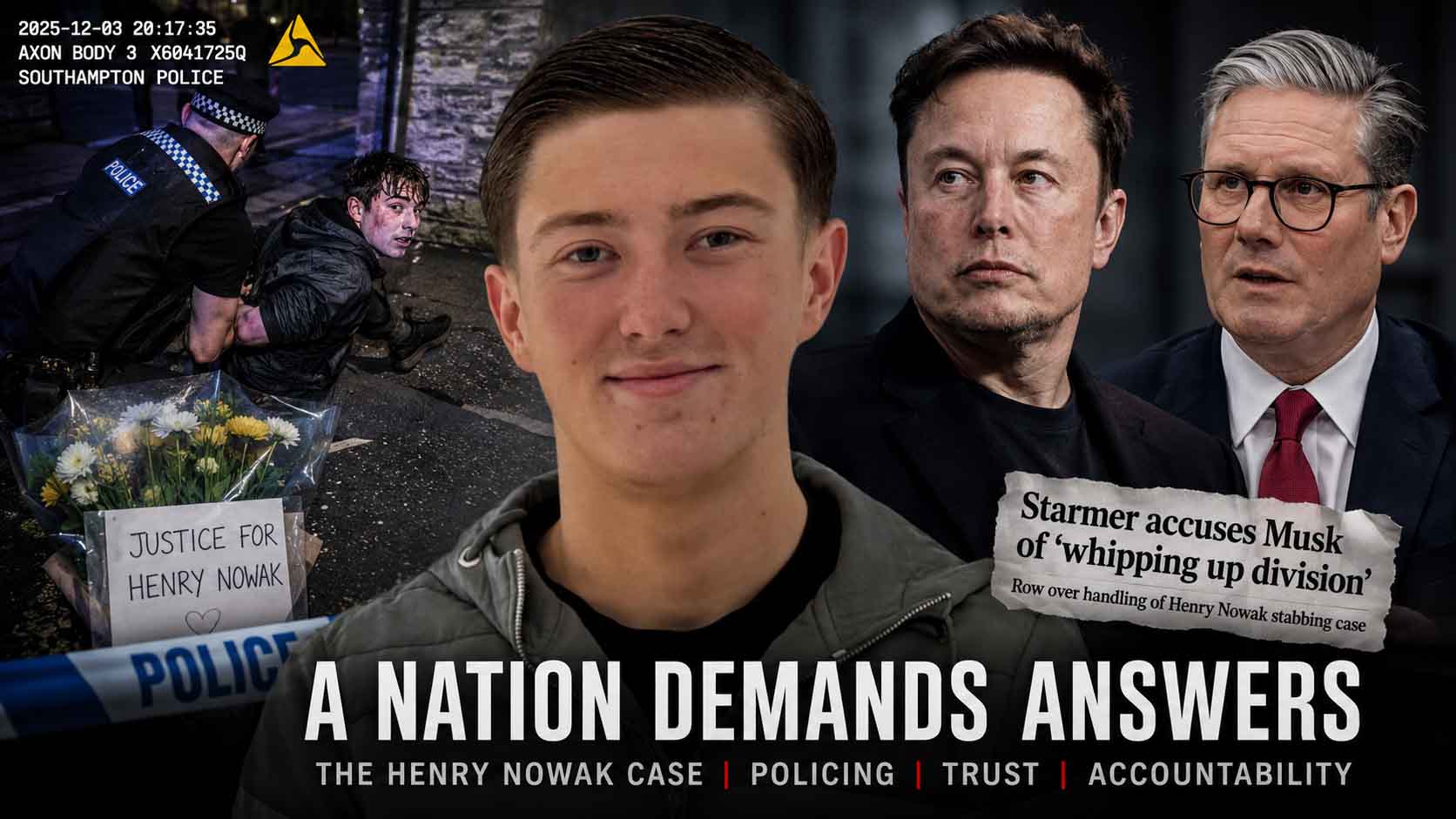
Henry Nowak Case Sparks National Debate as Starmer and Musk Clash Over Police Response
The murder of 18-year-old Henry Nowak has become one of the most contentious policing controversies in Britain in recent years, prompting a national debate over police conduct, racial bias allegations, and the growing influence of social media figures on public discourse.
The case has drawn international attention following repeated interventions by Elon Musk, who has criticised the actions of Hampshire Police and accused authorities of prioritising a false racism allegation over the welfare of a dying teenager. Prime Minister Sir Keir Starmer has responded by condemning attempts to politicise the tragedy, accusing Musk of “whipping up division”.
The Murder of Henry Nowak
Henry Nowak was fatally stabbed in Southampton in December 2025 by Vickrum Digwa. Following a trial, Digwa was convicted of murder and sentenced to life imprisonment with a minimum term of 21 years.
However, it was not the conviction itself that generated widespread controversy. Instead, public attention has focused on body-worn camera footage released after the trial, showing police officers handcuffing and arresting Nowak in the immediate aftermath of the attack.
The footage reportedly shows Nowak repeatedly telling officers that he had been stabbed and was struggling to breathe. Despite this, officers initially treated him as a suspect after Digwa alleged that he had been racially abused and assaulted.
Subsequent court proceedings established that Digwa’s allegations were false.
Family Condemns Police Treatment
The release of the footage prompted an emotional response from Nowak’s family, who described the treatment of their son as “heinous” and “inhumane”.
Family members questioned why officers appeared to accept the attacker’s account without adequately assessing Henry’s condition or investigating the circumstances more thoroughly.
Hampshire Police later apologised for aspects of the incident and referred the matter to the Independent Office for Police Conduct (IOPC). The watchdog has launched an investigation into the actions of the officers involved.
The IOPC has stressed that its inquiries remain ongoing and has urged the public not to prejudge the outcome.
Elon Musk Amplifies Public Anger
The controversy gained further momentum after Elon Musk shared clips and commentary relating to the case on X.
Musk questioned why officers appeared to believe the attacker’s allegations while handcuffing the victim of a stabbing. He suggested the incident reflected broader concerns about policing priorities and the handling of race-related complaints.
His posts quickly reached millions of users worldwide, generating significant public discussion and fuelling claims that the case represented an example of so-called “two-tier policing” — the belief that individuals are treated differently by authorities based on race, ethnicity or political considerations.
Supporters argue that Musk has drawn attention to serious questions that deserve public scrutiny. Critics, however, contend that his interventions risk inflaming tensions and encouraging conclusions before official investigations have been completed.
Starmer Condemns Attempts to Exploit Tragedy
Prime Minister Sir Keir Starmer has acknowledged the seriousness of the case and described the bodycam footage as deeply disturbing.
Speaking publicly, he said he felt “sick” after watching the footage and agreed that legitimate questions must be answered regarding the officers’ decision-making on the night of the attack.
However, Starmer also criticised Musk’s involvement, accusing him of interfering in British politics and attempting to deepen divisions within society.
The Prime Minister argued that Britain remains a nation of “reasonable, tolerant people” and warned against exploiting a family’s tragedy to advance wider political narratives.
His comments reflect growing concern within government that high-profile social media interventions can intensify public anger before official investigations have reached their conclusions.
Wider Questions About Policing
The case has reignited broader debates about policing in modern Britain.
Critics argue that the footage raises serious concerns about whether officers were overly influenced by allegations of racism and whether this affected their judgement during a rapidly evolving and potentially life-threatening situation.
Others caution against drawing definitive conclusions before the completion of the IOPC investigation, noting that officers often have to make difficult decisions based on limited information available at the scene.
Nevertheless, the footage has intensified public scrutiny of police training, operational decision-making, and the balance between investigating allegations of discrimination and ensuring immediate safeguarding responsibilities are met.
Investigation Continues
With Digwa’s murder conviction secured, attention has now shifted to determining whether mistakes were made in the police response and whether those mistakes contributed to the events that followed.
The ongoing IOPC investigation is expected to examine the actions of officers, the handling of the false racism allegation, and the circumstances surrounding Nowak’s arrest and treatment after he had been stabbed.
For many observers, the case has become about more than a single tragic incident. It has evolved into a wider discussion about public trust in policing, accountability, and the challenges facing law enforcement in an increasingly polarised political environment.
As investigations continue, both supporters and critics of the police response agree on one point: the circumstances surrounding Henry Nowak’s death raise questions that deserve clear and transparent answers.