

Why the Makerfield By-Election Has Become a Political Battleground
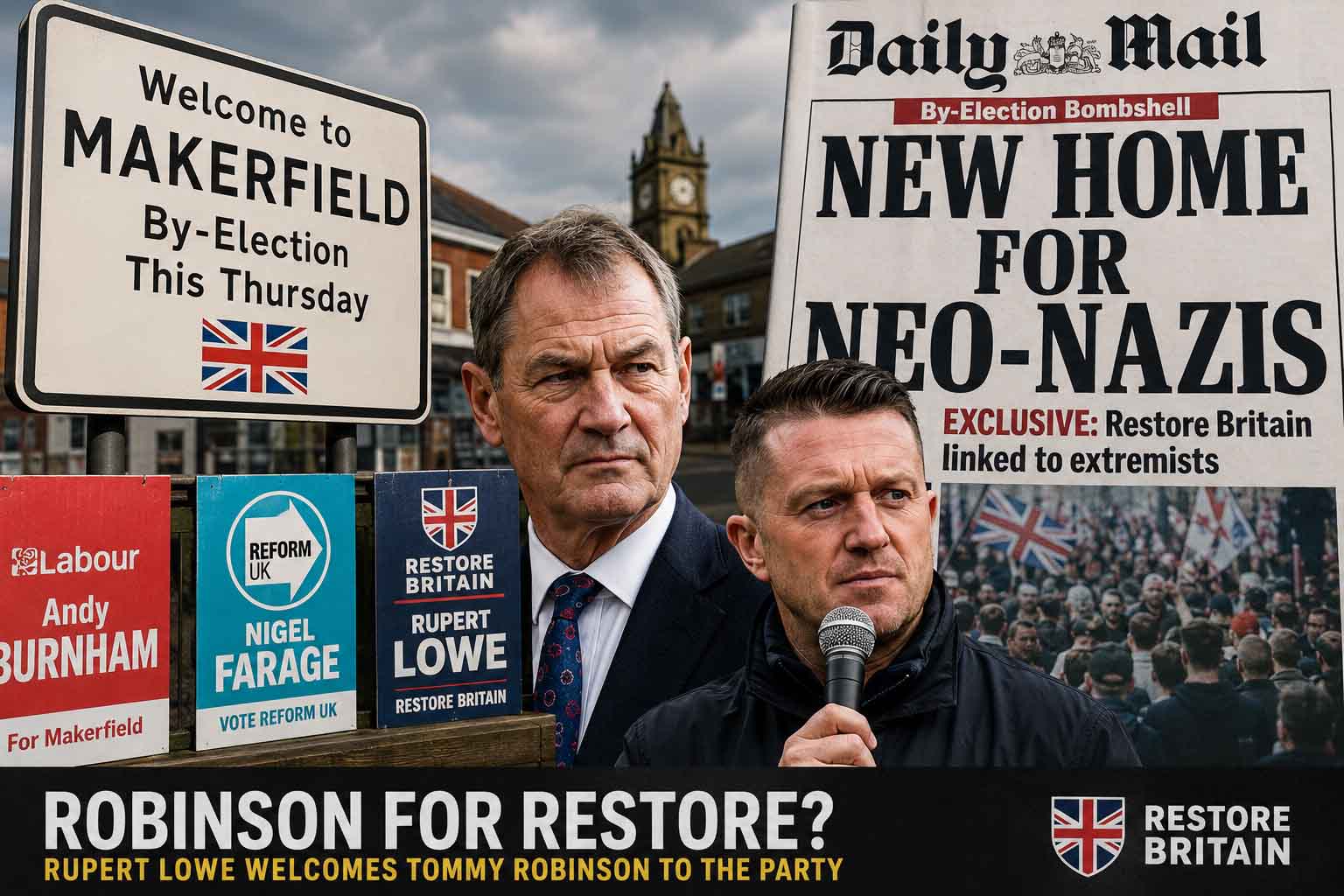
The forthcoming Makerfield by-election has rapidly become one of the most closely watched political contests in Britain. While by-elections often attract national attention, the level of media scrutiny surrounding the campaign has been unusually intense, particularly regarding the emergence of the new political party Restore Britain and its founder, Rupert Lowe.
Supporters of Restore Britain argue that the party is being subjected to a coordinated campaign of negative coverage by what they describe as the “mainstream media”. Critics, meanwhile, contend that journalists are carrying out legitimate scrutiny of a rapidly growing political movement whose policies and supporters have generated significant controversy.
The reality is likely more complex than either side suggests.
Why Makerfield Matters
The by-election is important because it is being viewed as a test of several competing political forces.
Polling suggests that Labour candidate Andy Burnham remains the frontrunner, while Nigel Farage and Reform UK are attempting to establish themselves as the primary opposition force among working-class voters concerned about immigration, crime and the cost of living. Recent polling indicates that Restore Britain is running behind both Labour and Reform, but could still attract enough support to influence the final outcome. (The Times)
Rather than threatening to win the seat outright, Restore Britain’s significance lies in its potential to split the right-wing vote. Several political analysts have suggested that this fragmentation could ultimately benefit Labour by reducing Reform UK’s chances of victory. (The Times)
The Rise of Restore Britain
Founded earlier this year following Rupert Lowe’s departure from Reform UK, Restore Britain has positioned itself to the right of Reform on a range of issues, particularly immigration, national identity and deportation policy. The party claims a rapidly growing membership base and has built a substantial online presence, particularly through social media platforms. (The Times)
Lowe has cultivated a significant following online and has become one of the most prominent voices on the nationalist right. Supporters view him as a politician willing to discuss issues they believe established parties ignore, while opponents argue that his rhetoric has pushed political debate further towards identity-based politics. (The Times)
The party’s growth has clearly unsettled Reform UK. Reports from multiple outlets suggest that Reform has adjusted its messaging in response to pressure from Restore Britain’s appeal among more hard-line voters. (The Guardian)
Why Is the Media Paying So Much Attention?
One explanation is straightforward: controversy attracts coverage.
Restore Britain has become the subject of intense reporting because of allegations regarding some individuals and groups expressing support for the party. Several publications have reported that activists associated with nationalist and far-right organisations have publicly backed Restore Britain or participated in campaign activities. (The Observer)
The issue has received additional attention following comments by Rupert Lowe regarding the possibility of anti-Islam activist Tommy Robinson joining the party. Lowe indicated that such a decision would ultimately be up to Robinson himself, a statement that generated substantial media interest. (The Times)
Supporters of Restore Britain reject accusations that the party itself is extremist, arguing that journalists are attempting to discredit a growing political movement by highlighting controversial supporters rather than debating its policies. Lowe and party representatives have repeatedly described some media allegations as smear campaigns. (Wikipedia)
Is the Media “Panicking”?
The evidence does not necessarily support the idea that the media are panicking because Reform UK will lose Makerfield.
In fact, much of the recent reporting suggests the opposite concern: that Restore Britain’s presence could prevent Reform from winning by dividing voters who broadly share concerns about immigration and national identity. Several polls indicate Labour remains ahead, with Restore Britain polling significantly below both Labour and Reform. (The Times)
From a news perspective, the story is compelling for three reasons:
- A new political party has emerged and is growing rapidly.
- It is challenging an established insurgent party, Reform UK.
- It has become embroiled in debates about nationalism, identity and extremism.
Those factors alone are sufficient to guarantee substantial media coverage, regardless of whether the party is likely to win a particular seat.
A Contest With National Implications
Whatever the result in Makerfield, the by-election has become about more than a single constituency.
For Labour, it is a test of whether traditional working-class support can be retained in areas where immigration and cultural issues have become increasingly important.
For Reform UK, it is a test of whether Nigel Farage can maintain control of the political space to the right of the Conservatives.
For Restore Britain, it is an opportunity to demonstrate that it can convert online support into votes and establish itself as a permanent force in British politics.
That is ultimately why Makerfield has attracted such intense attention. The by-election may not determine who governs Britain, but it could provide an early indication of how the political right will evolve in the years ahead. (The Telegraph)