

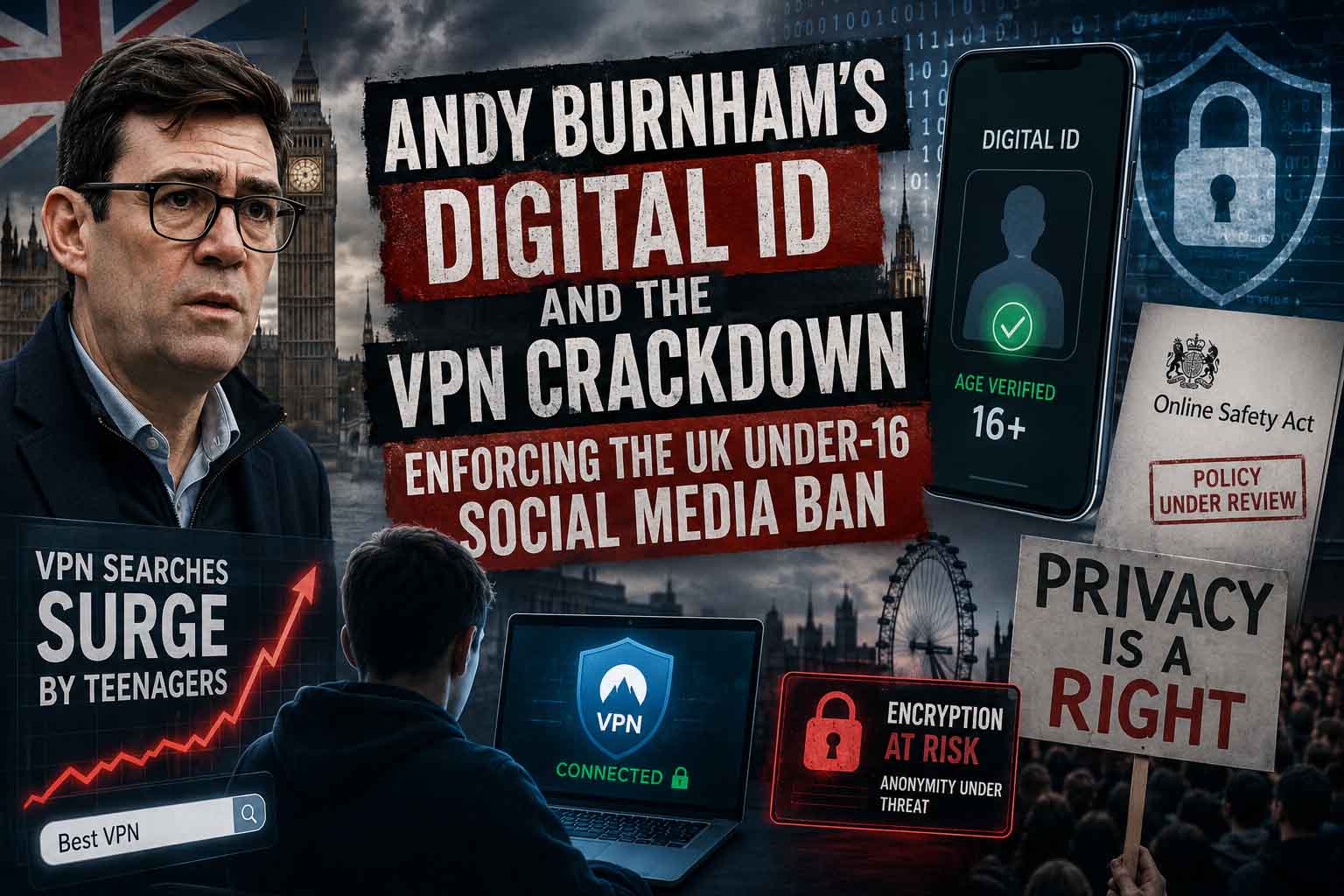
Andy Burnham’s Digital ID and the VPN Crackdown
Enforcing the UK Under-16 Social Media Ban
The enforcement of the UK’s “Australia-plus” social media ban for children under 16 has ignited an intense national debate over digital privacy and state surveillance. Following a massive surge in online searches for Virtual Private Networks (VPNs) by teenagers seeking to bypass age restrictions, the Government confirmed that strict restrictions and potential bans on VPN loopholes are being drawn up. This policy shift has fueled widespread public anxiety, amplified by reports of strategic planning within the team of Greater Manchester Mayor Andy Burnham—a prominent figure frequently linked to future Labour leadership discussions.
The crux of the controversy lies in a logistical reality: to stop under-16s from using VPNs to circumvent the social media ban, the state may have to mandate identity verification for anyone accessing encrypted network services. Critics argue this represents a profound threat to online anonymity, signaling a shift towards an authoritarian digital landscape.
The Policy Friction: Safety vs. Surveillance
The Government’s legislative agenda under the Online Safety Act aims to protect minors from online harms. However, enforcing a total ban on social media for under-16s creates a severe technical paradox. If children can bypass platform age gates using a VPN, the ban becomes ineffective.
To close this loophole, regulatory bodies and policymakers are assessing mechanisms that would force VPN providers to verify the age and geographic location of their users. The structural impact of this proposed framework highlights the deep friction between child safety initiatives and civil liberties:
| Objective | Proposed Mechanism | Civil Liberties Risk | Current Policy Status |
|---|---|---|---|
| Social Media Restriction | Mandating platforms (e.g., TikTok, Instagram) block accounts for users under 16. | High risk of mass commercial data-scraping and invasive age-gating for adults. | Confirmed government policy. |
| Closing the VPN Loophole | Forcing VPN services to verify the age and identity metrics of connecting users. | Eliminates fundamental internet anonymity and compromises encrypted data pathways. | Under active policy consultation. |
| Digital ID Integration | Utilizing structural ID uploads or third-party verification portals (e.g., Yoti). | Creates centralized targets for hackers; enables state tracking of network entry points. | Technological infrastructure active; legislative mandate debated. |
Andy Burnham’s Role and the Digital ID Debate
Andy Burnham has forcefully backed the under-16 social media ban, describing it as a “critical first step” and advocating for extreme urgency in its delivery. While Burnham has historically distanced himself from universal biometric identity cards—reflecting an ideological split with alternative factions in his party—the operational demands of enforcing online age restrictions are driving his policy framework toward digital verification.
The reliance on third-party verification tools or smartphone identity wallets effectively introduces a digital ID system through the back door. Privacy advocates argue that even if a universal identity card is rejected, a mandatory digital check to access basic privacy tools like a VPN achieves a similar level of state oversight.
Privacy Implications and Public Outcry
Digital rights organizations, including Big Brother Watch, have heavily criticized the proposals, labeling them a draconian crackdown on personal privacy. Cybersecurity experts warn that forcing age-verification gates onto encrypted protocols fundamentally undermines the core purpose of a VPN. For consumer VPN utilities to comply, they would be forced to abandon their strict “no-logs” policies, potentially recording user data and leaving individuals vulnerable to cyber criminals.
Furthermore, previous trials under the broader scope of the Online Safety Act have demonstrated that centralized identity validation frameworks are highly vulnerable. Forcing citizens to upload government-issued documentation to access encrypted networks creates a lucrative target for data breaches and identity theft.
The Path Ahead
The intersection of child safety legislation and digital infrastructure has brought the UK to a critical turning point. As the Government prepares to clarify its stance on VPN restrictions, the balance between protecting minors and preserving the fundamental right to online privacy remains highly volatile.