

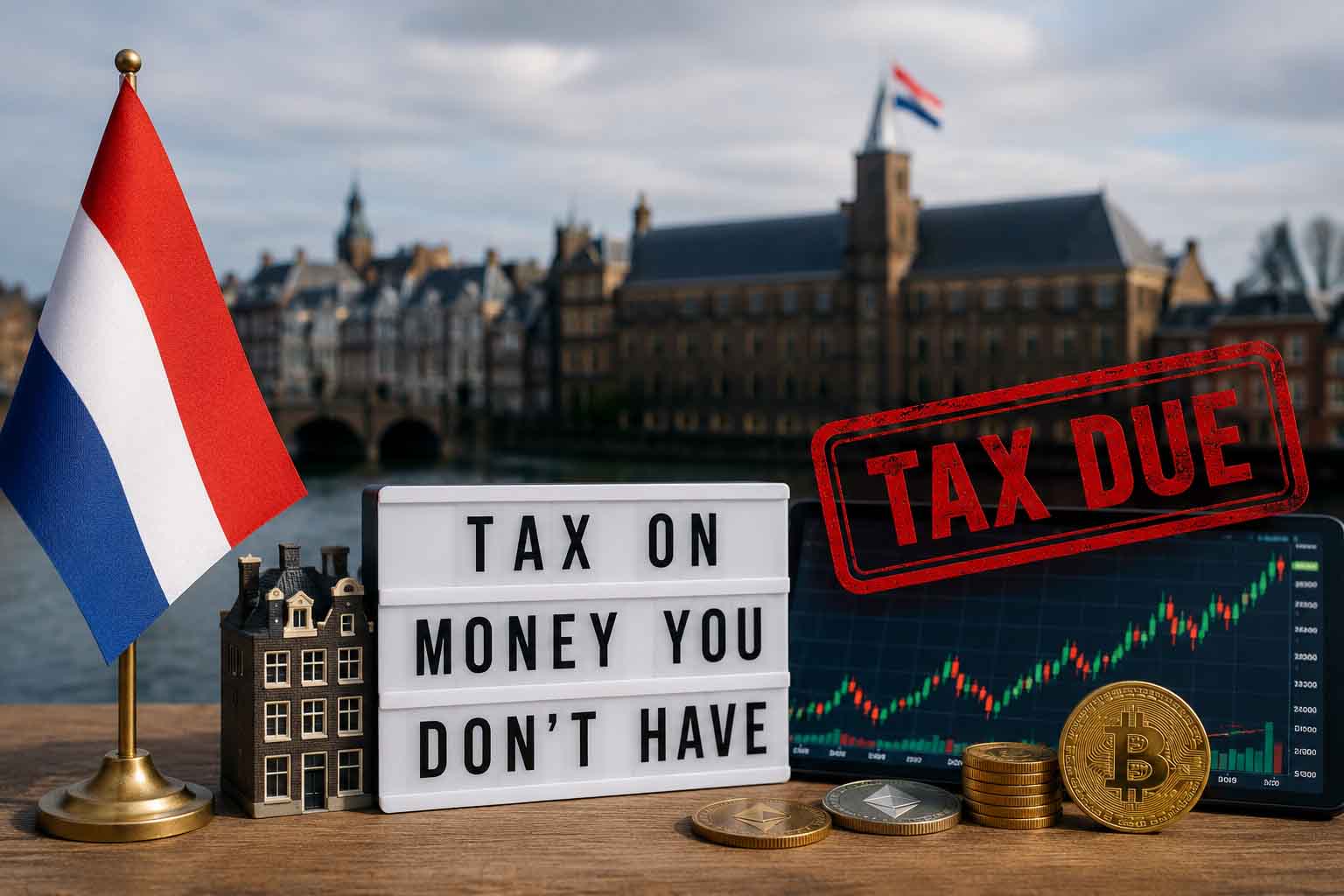
Netherlands Introduces Tax on Money You Don’t Have
The Netherlands is moving towards one of the most controversial tax reforms in Europe, with plans to tax investors on gains they have not yet realised.
Under proposed changes to the country’s Box 3 tax system, Dutch residents could be required to pay tax on increases in the value of investments such as shares, bonds and cryptocurrencies, even if those assets have not been sold and no cash has been received. The reform has sparked fierce debate among investors, entrepreneurs and tax experts, who argue that the policy could force people to sell assets simply to pay their tax bills.
What Is Changing?
The Dutch House of Representatives approved the “Actual Return Box 3 Act” in February 2026, with the government aiming to introduce the new system from 1 January 2028. The reform was designed to replace the existing deemed-return model, which had previously been ruled unlawful by the Dutch Supreme Court. Under the old approach, taxpayers were taxed based on assumed investment returns rather than actual performance.
The new proposal would instead tax actual investment returns at a flat rate of 36 per cent. However, for many financial assets, “actual return” includes not only dividends, interest and realised profits but also unrealised gains — increases in value that exist only on paper.
For example, if an investor owns shares worth €100,000 and their portfolio rises to €120,000 during the year, the €20,000 increase could be treated as taxable income, even if none of the shares were sold.
Why Is the Government Doing This?
Dutch lawmakers argue that the reform is intended to create a fairer system by taxing real economic gains rather than hypothetical returns. The change follows years of legal challenges against the previous framework, which often taxed savers on returns they never achieved. The courts concluded that the old system could result in unfair taxation, particularly during periods of low interest rates.
Supporters of the reform also argue that annual taxation of unrealised gains reduces opportunities for wealthy investors to defer tax indefinitely by simply holding appreciating assets.
Why Critics Are Concerned
Opponents say the reform replaces one perceived unfairness with another.
The most common criticism is that taxpayers may face a bill without having received any cash to pay it. A share portfolio, cryptocurrency holding or investment fund may rise substantially in value during a year, triggering a tax liability despite the investor having made no sale and received no income.
Critics warn that this could force some investors to liquidate assets solely to meet tax obligations. The concern is particularly acute for individuals holding volatile investments whose values fluctuate significantly from year to year. If markets later decline, investors may find themselves having paid tax on gains that subsequently disappear.
Business groups have also raised concerns that the policy could discourage investment and encourage wealthier individuals to relocate capital to jurisdictions with more traditional capital gains tax regimes.
Not All Assets Are Treated Equally
The proposed system does include some notable exceptions.
Real estate investments and qualifying startup shareholdings are generally expected to remain subject to taxation when gains are realised rather than on annual paper increases in value. The government has acknowledged that certain illiquid assets present practical difficulties for annual valuation and taxation.
A tax-free return allowance of approximately €1,800 per person is also planned, although critics argue this provides little protection for larger investors.
Could the Plan Still Change?
Despite approval by the lower house of parliament, the reform is far from settled.
The legislation still faces scrutiny in the Dutch Senate, and Finance Minister Eelco Heinen has already acknowledged that amendments may be necessary. Political pressure has intensified following criticism from investors, business organisations and tax professionals. Several reports suggest the government is considering revisions, including the possibility of moving towards a more conventional realised-gains system before the reforms take effect.
As a result, while the Netherlands remains on course to introduce the new Box 3 regime in 2028, the final shape of the legislation remains uncertain.
A European Test Case
If implemented in its current form, the Dutch reform would become one of the most prominent examples of a developed economy taxing unrealised investment gains on a broad scale. Supporters view it as a modern solution to perceived loopholes in wealth taxation, while critics see it as a tax on wealth that exists only on paper.
The outcome of the Dutch debate will be closely watched across Europe, where governments are increasingly searching for new ways to raise revenue while balancing concerns about investment, economic growth and taxpayer fairness.