

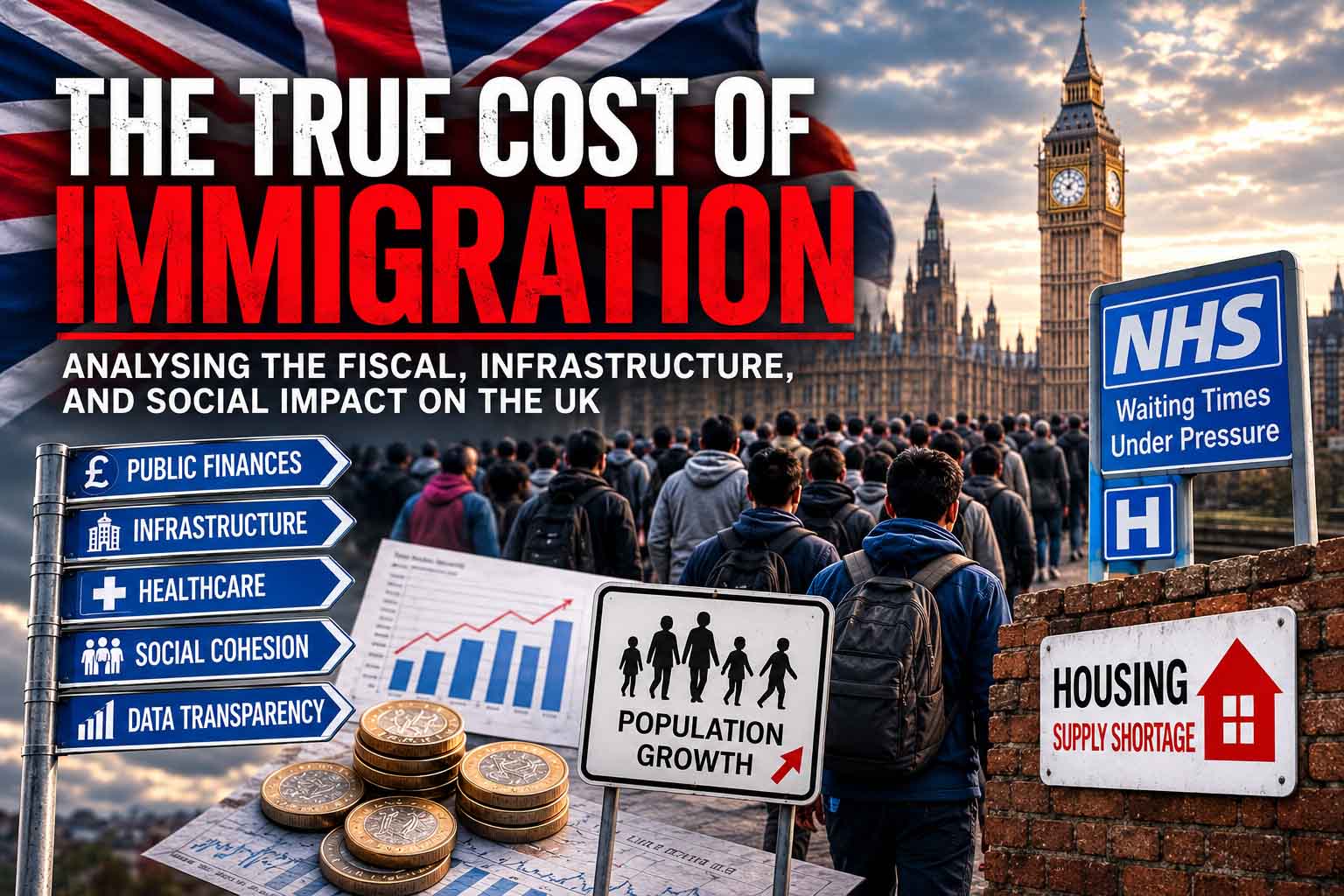
The True Cost of Immigration
Analysing the Fiscal, Infrastructure, and Social Impact on the UK
The debate surrounding the financial and social impacts of immigration remains one of the most prominent fixtures in British political discourse. Central to this discussion are questions regarding how immigration affects public finances, the strain it places on state-funded infrastructure, and the transparency of government data. Examining these factors requires balancing official regulatory frameworks with independent economic analyses.
The Welfare and Healthcare Regulatory Framework
A common point of contention is the degree to which foreign nationals access the UK welfare state. Under current British immigration law, the vast majority of non-UK citizens moving to the country operate under strict legal limitations:
- No Recourse to Public Funds (NRPF): Most temporary visa holders—including skilled workers, students, and family dependants—have an NRPF condition attached to their stay. This legally bars them from claiming mainstream welfare benefits, including Universal Credit, Child Benefit, and social housing, usually until they achieve Indefinite Leave to Remain (ILR), a process taking five to ten years.
- The Immigration Health Surcharge (IHS): To offset potential costs to the National Health Service (NHS), temporary migrants must pay an upfront health surcharge during their visa application. This fee is mandatory regardless of whether the individual uses public healthcare or pays additional taxes through employment.
- Asylum Support: Asylum seekers awaiting a decision on their refugee status are legally prohibited from working. Because they cannot access standard welfare, the Home Office provides them with basic managed accommodation and a highly restricted weekly stipend to cover essential provisions like food and toiletries.
Fiscal Contributions vs Infrastructure Strain
Economic research into the net impact of immigration generally splits into two categories: direct fiscal contributions and systemic infrastructure capacity.
From a purely budgetary perspective, macroeconomic data from bodies like the Migration Advisory Committee (MAC) indicates that working-age immigrants often provide a net positive fiscal contribution. Because the majority of visa paths require confirmed employment or private funding, these individuals pay income tax, National Insurance, and high visa fees without drawing heavily on age-related state expenditure, such as pensions or long-term social care.
Conversely, critics emphasise that high net migration can exacerbate long-standing structural pressures on local infrastructure. Even if an individual contributes financially, physical public services—such as NHS GP surgeries, hospital bed capacity, school placements, and affordable housing stocks—cannot always expand quickly enough to absorb rapid population growth. In areas experiencing high migration density, this mismatch can lead to increased local competition for public resources and extended waiting times.
Data Transparency and Public Trust
Questions regarding whether the state adequately accounts for the costs of migration frequently impact public trust. The UK relies on a combination of official data and independent oversight to track these figures:
- Official Reporting: The Office for National Statistics (ONS) and the Home Office regularly publish detailed quarterly data covering net migration, visa grants, and asylum processing costs.
- Independent Analysis: Think tanks across the political spectrum utilize this raw data to model the long-term economic impacts of migration. These models often yield differing conclusions depending on the variables used, such as whether they focus on short-term tax revenue or long-term public capital investments like building new roads and hospitals.
Social Cohesion and Public Sentiment
The intersection of economic strain and demographic change often creates significant social friction. When public perception leans toward the belief that the distribution of state resources is inequitable, or that public concerns are being overlooked by policymakers, democratic dissatisfaction can manifest as political polarization or localized social unrest.
Addressing these complex dynamics remains a core challenge for governance. Balancing the economic demands of a country’s workforce with the finite capacity of its public infrastructure—while maintaining clear, transparent communication with the electorate—is vital for mitigating community tensions and fostering informed civic debate.