

Why Is Labour So Determined to Hand Over the Chagos Islands?
Recent reports that the Trump administration is exploring the possibility of purchasing the Chagos Islands have once again thrown a spotlight on one of the most controversial foreign policy decisions facing the British government.
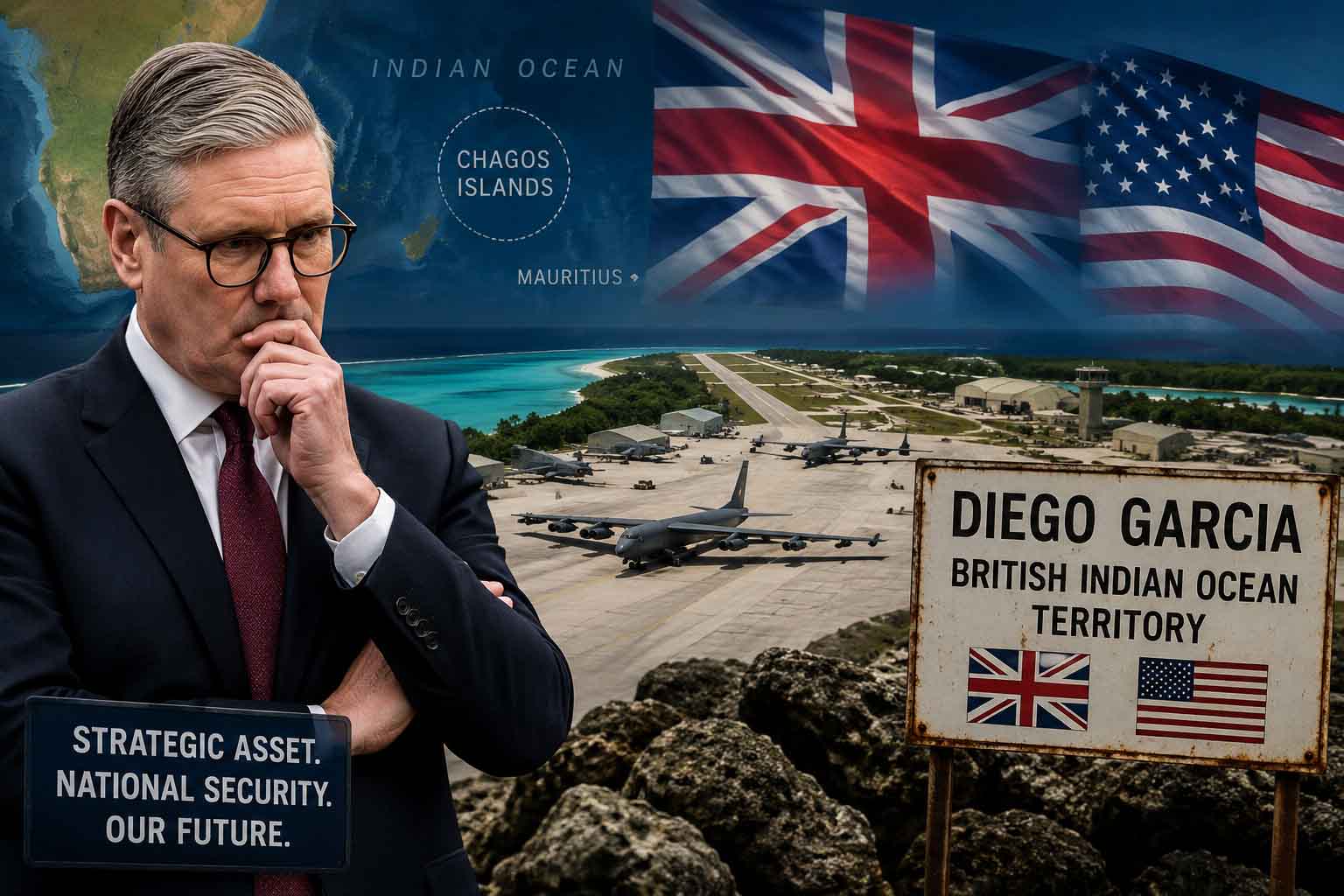
At the centre of the debate is Diego Garcia, a strategically vital military base jointly operated by the United Kingdom and the United States. Located in the Indian Ocean, the facility has played a critical role in Western military operations for decades, providing a forward operating platform for missions across the Middle East, Africa and Asia.
Yet despite its significance, Sir Keir Starmer’s government remains committed to a plan that would see sovereignty over the Chagos Islands transferred to Mauritius, with Britain then leasing back the Diego Garcia base under a long-term agreement.
The proposal has prompted growing criticism from security analysts, opposition politicians and members of the public who question both the wisdom and necessity of relinquishing sovereignty over territory that remains central to Western defence strategy.
The latest reports from Washington only deepen those concerns. According to multiple sources, officials within the Trump administration are examining whether the United States could acquire the islands outright should sovereignty eventually pass to Mauritius. The apparent objective is simple: secure permanent control of a military asset considered indispensable to American national security.
That development raises an obvious question. If the United States views the Chagos Islands as so strategically important that it is willing to consider purchasing them, why is the British government so determined to surrender sovereignty in the first place?
Supporters of the transfer argue that it resolves a long-running territorial dispute with Mauritius and brings Britain’s position into line with international legal opinions. They contend that the military base itself would remain operational under the terms of any agreement and that security arrangements would continue unchanged.
Critics, however, remain unconvinced.
They argue that sovereignty matters. While a lease may provide legal access to a military facility, it does not provide the same degree of certainty as direct control. Future governments in Mauritius may adopt different positions. Regional geopolitical circumstances may change. International pressure could evolve over the coming decades. What appears secure today may not remain secure indefinitely.
There are also concerns about cost. Reports suggest that Britain could be required to make substantial annual payments in order to lease back territory it currently controls. For many taxpayers, the prospect of paying significant sums to retain access to an existing strategic asset appears difficult to justify.
The broader geopolitical environment only intensifies these concerns. The Indian Ocean is becoming an increasingly important theatre of strategic competition. China’s expanding naval presence, growing tensions in the Indo-Pacific region and instability across parts of Africa and the Middle East have elevated the importance of forward military bases such as Diego Garcia.
In that context, opponents of the transfer argue that this is precisely the wrong moment to weaken Britain’s direct control over one of its most valuable strategic locations.
The debate ultimately extends beyond legal arguments or diplomatic negotiations. It concerns Britain’s role in the world, the future of its defence posture and its ability to protect national interests in an increasingly uncertain international environment.
As discussions continue on both sides of the Atlantic, one question remains unanswered: if Diego Garcia is considered indispensable by Britain’s closest ally, why is the British government prepared to give up sovereignty over the territory that hosts it?
Until a convincing answer is provided, the controversy surrounding the Chagos Islands is unlikely to disappear.