

Andrew Bridgen Warns of a Growing Crisis in British Democracy
Former MP Andrew Bridgen has issued a stark warning about the future of democracy in Britain, arguing that public trust in political institutions, the media and the state has reached breaking point. Speaking candidly about migration, free speech, censorship and political accountability, he claimed that many people no longer believe democratic change can be achieved through the ballot box alone.
Bridgen described the political climate as one of deep public disillusionment, arguing that successive governments of all political persuasions have failed to deliver on promises made to voters. He pointed specifically to immigration policy, claiming that despite repeated public demands for lower levels of migration, governments have consistently overseen increases instead.
According to Bridgen, this growing gap between public opinion and political action is causing more people to question the legitimacy of the political system itself. He argued that many citizens are “waking up” to what he described as a political and media “pantomime”, driven in part by the rise of social media and the decline of traditional news outlets.
He suggested that mainstream media organisations are rapidly losing public trust because increasing numbers of people believe key issues are either ignored or selectively reported. In his view, one of the greatest powers of modern media is not simply what it reports, but what it chooses not to report.
Concerns Over Free Speech and Censorship
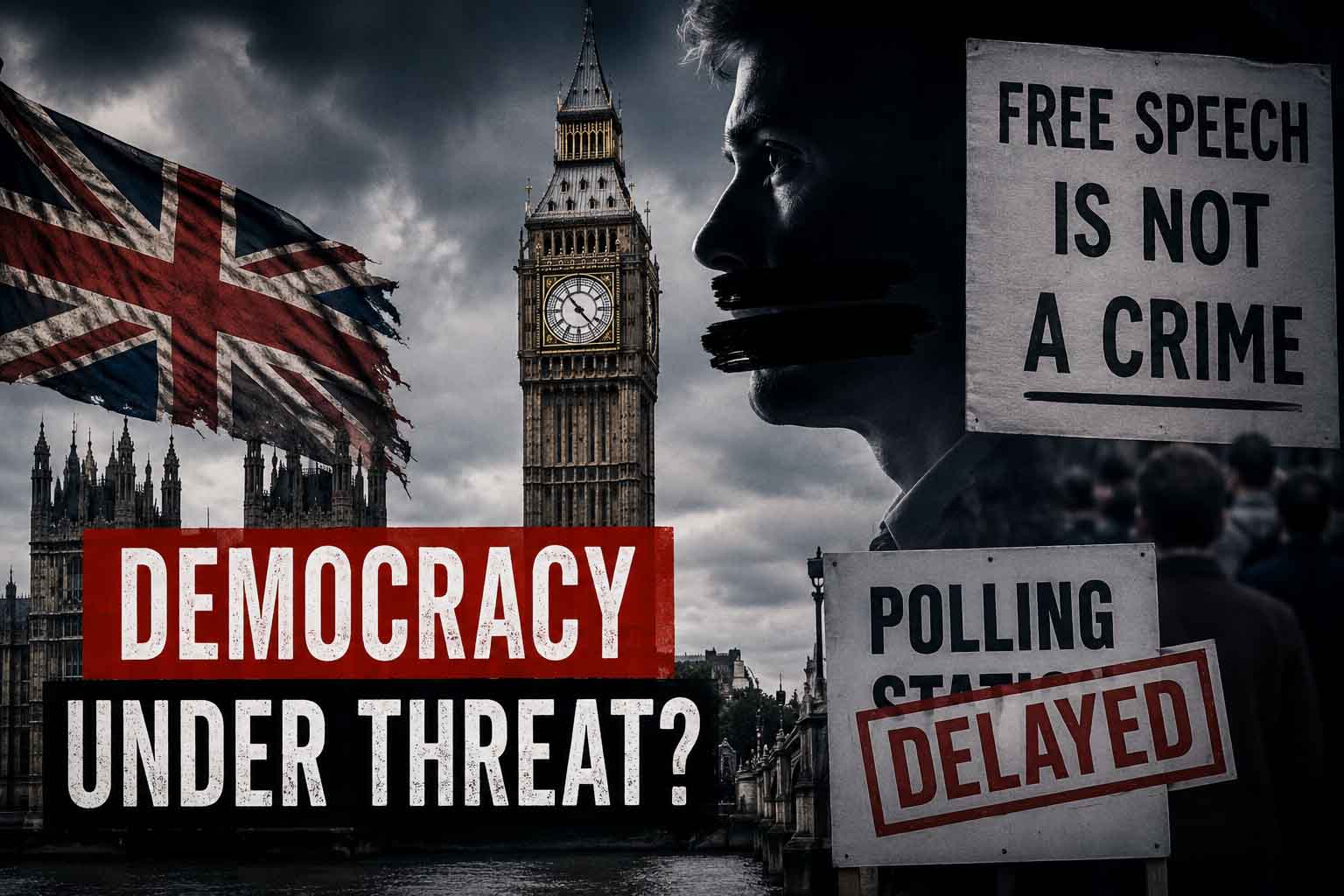
A significant part of Bridgen’s remarks focused on free speech and what he described as increasing efforts to silence dissenting voices. He referred to a recent police investigation into a tweet he had shared, saying the case was eventually dropped after several days but arguing that the process itself was designed to intimidate.
Bridgen claimed that the wider aim is to encourage self-censorship by making people fearful of expressing controversial opinions online. He argued that individuals who challenge dominant narratives risk losing not only their reputations, but also their livelihoods and personal freedoms.
He also discussed the imprisonment of broadcaster and commentator Alex Belfield, whom Bridgen believes has been treated unfairly by the justice system. Bridgen questioned aspects of Belfield’s conviction and subsequent return to prison, claiming the case serves as a warning to others who may wish to challenge establishment narratives or build independent media platforms.
According to Bridgen, the message being sent is clear: those who oppose accepted narratives risk severe personal and professional consequences.
Restore Britain and Political Opposition
Bridgen expressed support for the political movement Restore Britain, describing it as one of the few remaining democratic avenues for political change. He acknowledged, however, that any attempt to challenge the existing political establishment would face enormous obstacles.
Despite his concerns, he maintained that democratic participation remains important and said he hoped to stand for Restore Britain at a future general election, should elections proceed as scheduled.
At the same time, Bridgen voiced fears that emergency powers could eventually be used to postpone elections indefinitely. He argued that in the event of major civil unrest or a large-scale international conflict, the government could invoke the Civil Contingencies Act and effectively place the country under forms of martial law.
He suggested that wider geopolitical tensions, particularly involving Russia, are being used to prepare public opinion for a prolonged period of instability across Europe. Bridgen claimed several European governments facing declining popularity may benefit politically from emergency conditions that limit democratic accountability.
COVID-19, Vaccine Criticism and Media Distrust
Bridgen again revisited his longstanding criticism of the government’s handling of the COVID-19 pandemic and vaccine rollout. He argued that important data concerning vaccine harms and excess deaths had not received adequate media scrutiny.
As an example, he referred to the Irish city of Waterford, which achieved one of the highest vaccination rates in the world during the pandemic. Bridgen claimed that despite official praise for the city’s vaccination efforts, subsequent figures allegedly showed high rates of COVID-19 cases and excess deaths.
He accused mainstream media organisations of ignoring uncomfortable evidence while promoting government-approved narratives.
Bridgen also compared the situation to the Post Office Horizon scandal, an issue he highlighted years before it became a national story. He stated that he had approached major media organisations with evidence relating to wrongful convictions of sub-postmasters as early as 2014, but alleged that journalists refused to pursue the story at the time.
In his view, the media’s reluctance to investigate powerful institutions remains one of the greatest threats to accountability in modern Britain.
Claims of Political Pressure
The former MP further alleged that he had faced repeated attempts to silence or financially damage him because of his public positions. He claimed there had been efforts to bankrupt him, which would prevent him from standing for Parliament again.
Bridgen also made controversial claims regarding pressure placed on him during the pandemic, alleging that he was offered incentives to support government messaging surrounding vaccines but refused because of ethical concerns.
Despite the risks he believes he faces, Bridgen insisted he intends to continue speaking publicly. He argued that Britain’s tradition of free speech must be defended actively before it is gradually eroded.
A Deepening Divide
Throughout the discussion, Bridgen painted a picture of a society increasingly divided between official institutions and a growing number of sceptical citizens. He suggested that worsening economic pressures, political distrust and restrictions on speech could push the country into a far more volatile period in the years ahead.
At the same time, he argued that public awareness is growing and that more people are beginning to question narratives they previously accepted without challenge.
Whether his warnings reflect genuine emerging trends or simply wider public anxieties, Bridgen’s comments illustrate the increasingly polarised nature of political discourse in Britain — particularly on issues such as free speech, media influence, migration and the legacy of the pandemic.