

How Britain’s Culture Wars Are Reshaping Society
The Politics of “Far-Right”
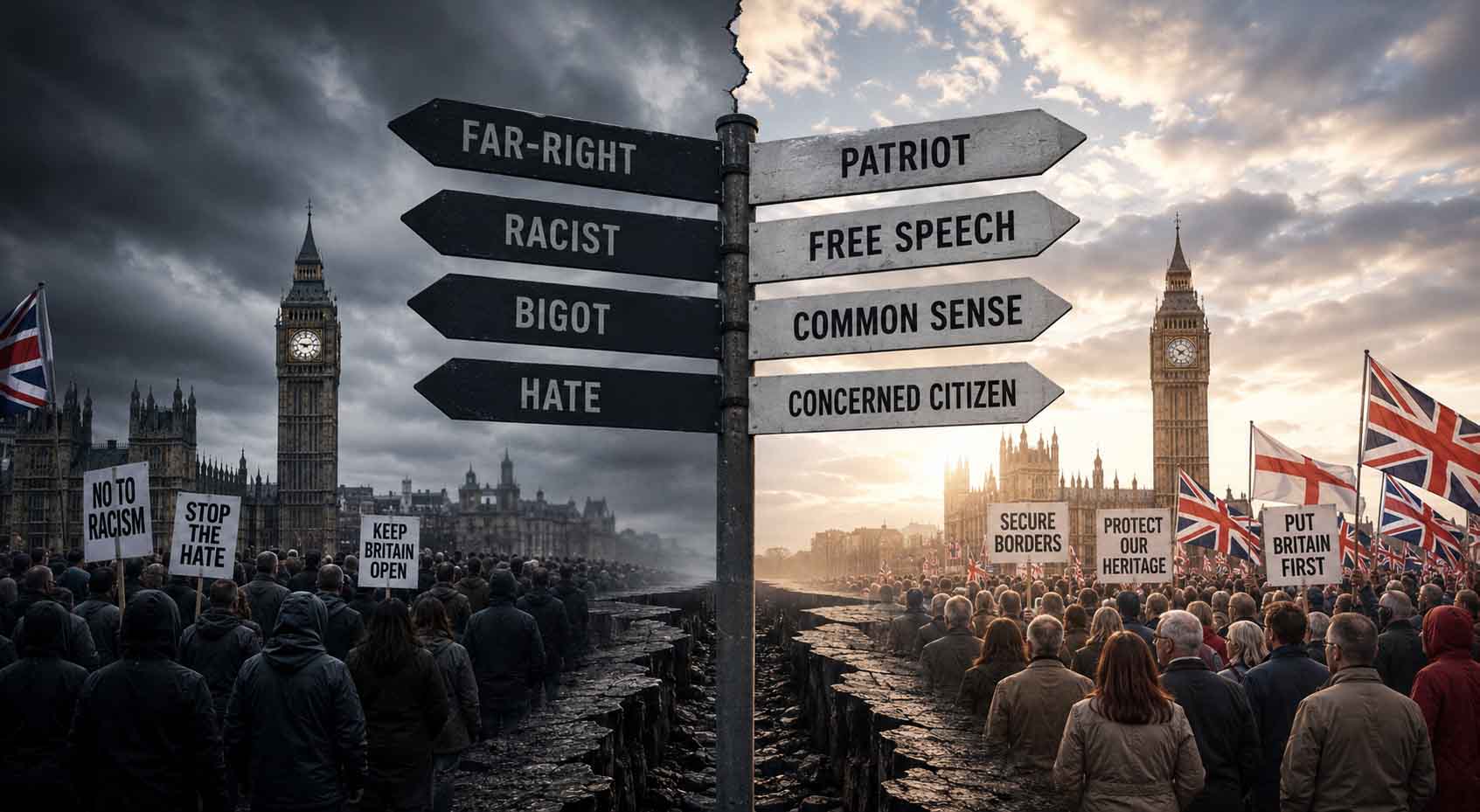
Over the past decade, Britain has experienced a profound political and cultural transformation. Debates that were once confined to the fringes of public discourse — concerning immigration, national identity, Brexit, gender ideology, Net Zero policies and the role of Christianity in public life — have moved firmly into the mainstream. At the same time, the language used to describe those debates has become increasingly inflammatory.
One of the most contentious developments has been the growing tendency among politicians, commentators, activists and public institutions to label dissenting or socially conservative views as “far-right”. For millions of people across the United Kingdom, this is no longer seen as a neutral political description, but as a deliberate attempt to delegitimise opposition and stigmatise ordinary citizens.
The consequences of this shift are now being felt throughout British society.
The Expansion of the “Far-Right” Label
Historically, the term “far-right” referred to extremist political movements associated with authoritarianism, racial nationalism or political violence. In modern Britain, however, critics argue that the definition has broadened dramatically.
Today, individuals may find themselves accused of being “far-right” for:
- supporting stricter border controls,
- opposing illegal immigration,
- defending Brexit,
- criticising aspects of multiculturalism,
- questioning Net Zero policies,
- expressing traditional Christian beliefs,
- or rejecting aspects of modern gender ideology.
Many voters who would previously have considered themselves politically moderate now believe they are being categorised alongside extremists simply for holding views that, until relatively recently, were commonplace across large sections of British society.
This perceived redefinition of political language has created growing resentment, particularly among working-class communities and older voters who feel culturally alienated from Britain’s political and media establishment.
The Role of Institutions
A major source of public frustration stems from the belief that state institutions and publicly funded organisations increasingly promote ideological conformity.
Government departments, universities, schools, large corporations and sections of the civil service have all embraced forms of diversity, equity and inclusion training rooted in modern identity politics. Critics argue that these frameworks often divide society into categories of privilege and oppression, discouraging open debate and creating pressure to conform to approved opinions.
Teachers and schools have become especially controversial battlegrounds. Some parents believe classrooms are becoming politicised, particularly regarding gender identity, race and British history. Others argue schools have a duty to promote inclusivity and protect vulnerable groups.
The result is a widening gulf between different sections of society over what education should be for: the transmission of shared national values, or the reshaping of social attitudes.
Brexit and the Fracturing of National Consensus
The Brexit referendum exposed divisions within Britain that had been building for decades. While the vote was formally about membership of the European Union, it quickly evolved into a wider struggle over sovereignty, borders, identity and democratic accountability.
For many Leave voters, Brexit represented a rejection of political centralisation and technocratic governance. Yet many also felt that their concerns — particularly regarding immigration and national identity — were routinely dismissed as ignorant, xenophobic or reactionary.
The years following the referendum deepened public mistrust in political institutions. Repeated attempts to delay or soften Brexit reinforced the belief among many voters that parts of the political establishment were unwilling to accept democratic outcomes that conflicted with their worldview.
This erosion of trust did not disappear after Britain formally left the EU. Instead, it contributed to a broader sense that political elites and ordinary citizens increasingly inhabit different realities.
Social Media and Political Polarisation
Social media has intensified these tensions dramatically.
Online platforms reward outrage, conflict and moral certainty. Nuanced discussion is often drowned out by emotionally charged rhetoric, while algorithms amplify the most divisive voices. As political identities harden, compromise becomes increasingly difficult.
The labelling of opponents as “far-right”, “fascist”, “communist”, “traitorous” or “dangerous” creates an atmosphere in which disagreement itself becomes morally suspect. Public figures, journalists and academics who challenge prevailing narratives may face campaigns of online abuse, reputational attacks or professional pressure.
Equally, inflammatory rhetoric from genuinely extremist individuals can further radicalise public debate, reinforcing fears on all sides.
This cycle of accusation and counter-accusation is contributing to a breakdown in social trust.
Immigration and Cultural Anxiety
Immigration remains one of the most politically sensitive issues in Britain. Successive governments have overseen historically high levels of migration, even while promising greater control of the borders.
Supporters of mass immigration often emphasise economic growth, labour shortages and multicultural diversity. Critics, however, point to pressures on housing, wages, public services and community cohesion.
For many Britons, particularly in towns and cities undergoing rapid demographic change, concerns about immigration are not solely economic. They are also cultural. Questions surrounding national identity, shared values and social integration have become increasingly prominent.
Yet many people feel unable to discuss these issues openly without risking accusations of prejudice or extremism. This perception of censorship can intensify resentment and drive political alienation.
Net Zero and the Cost of Ideological Politics
Environmental policy has emerged as another major dividing line.
Supporters of Net Zero argue that rapid decarbonisation is necessary to address climate change and secure long-term environmental sustainability. Critics, however, increasingly view some green policies as economically damaging, unrealistic or detached from everyday concerns.
Rising energy prices, restrictions on motorists, agricultural regulations and fears surrounding deindustrialisation have contributed to growing scepticism among sections of the public.
For some voters, opposition to Net Zero is now tied to a broader frustration with what they see as top-down policymaking by political and corporate elites who are insulated from the economic consequences faced by ordinary households.
The Danger of Mutual Demonisation
Britain’s growing political instability is not solely the result of one ideology or one side of the political spectrum. The deeper problem is the collapse of mutual legitimacy.
When large groups of citizens are routinely portrayed as morally suspect for holding mainstream political opinions, social cohesion weakens. Equally, when political disagreements descend into hostility towards minority groups or democratic institutions, trust deteriorates further.
A democratic society depends upon the ability to disagree without dehumanising opponents. Once political identity becomes a form of moral warfare, compromise is replaced by permanent conflict.
The challenge facing Britain is therefore not simply economic or electoral. It is cultural and civic. The country must find a way to restore open debate, tolerate disagreement and rebuild trust between citizens who increasingly view one another with suspicion.
Without that restoration of democratic confidence, Britain risks drifting further into social fragmentation, political paralysis and permanent culture war.