

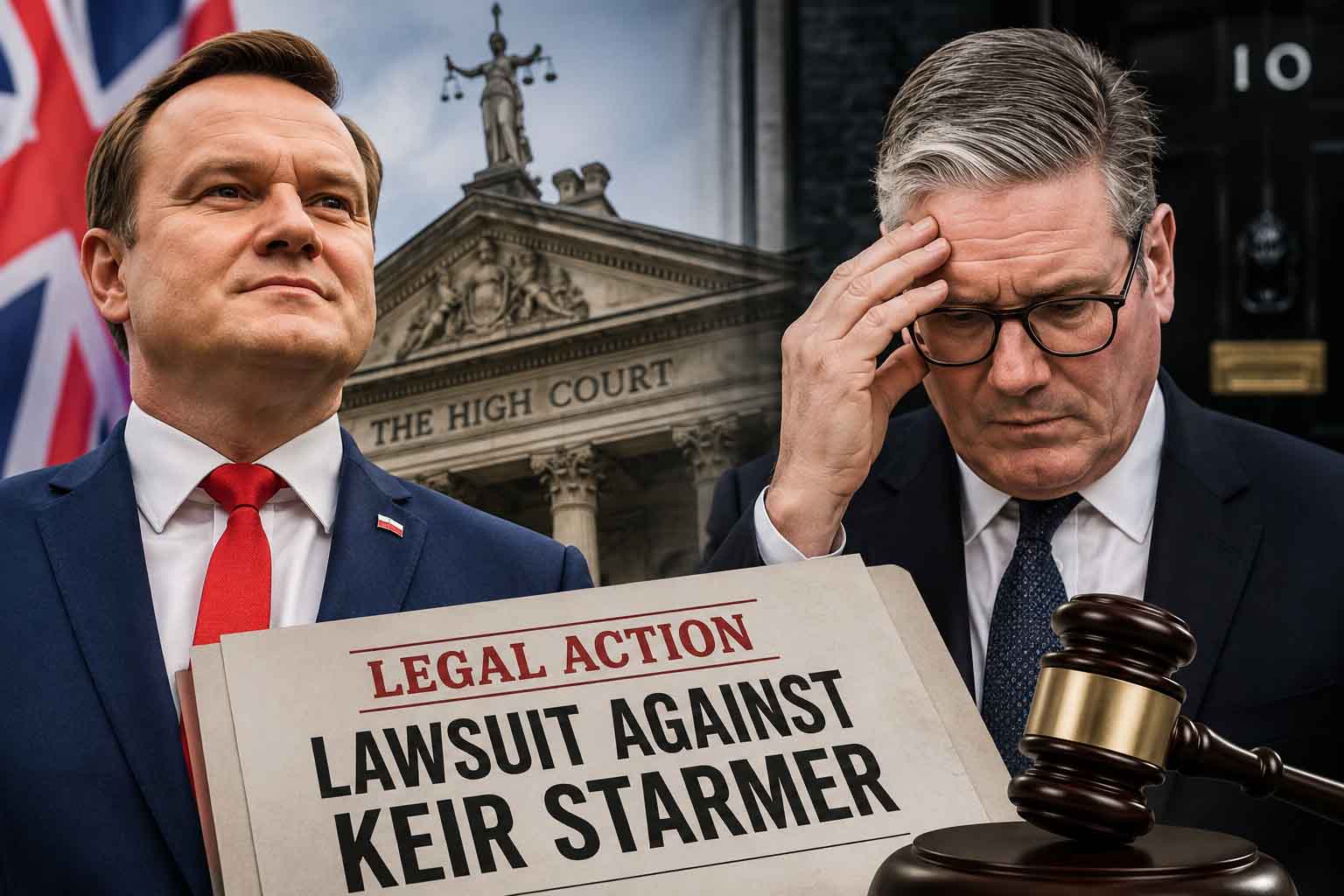
Polish MEP Signals Legal Action Against Starmer Following UK Entry Ban
22 June 2026
Polish Member of the European Parliament Dominik Tarczyński has renewed scrutiny of a dispute with the UK Government after previously vowing to pursue legal action against former Prime Minister Keir Starmer over a decision to bar him from entering the country.
The controversy dates back to May 2026, when the Home Office revoked Tarczyński’s Electronic Travel Authorisation (ETA) ahead of a planned appearance at a Tommy Robinson-linked “Unite the Kingdom” rally in London. Officials informed the Polish politician that his presence in the United Kingdom was considered “not conducive to the public good”, a standard legal basis used by the Government when refusing entry to foreign nationals.
Tarczyński, a member of Poland’s Law and Justice (PiS) party and a sitting MEP, strongly criticised the decision. In a series of public statements, he described the move as politically motivated and accused the Labour Government of attempting to silence dissenting voices.
Most notably, Tarczyński stated that he intended to sue Keir Starmer personally once the Prime Minister was no longer in office. He characterised the decision as an abuse of power and suggested that legal proceedings would be pursued to defend his reputation and challenge what he viewed as an unjustified restriction on his ability to travel and speak publicly.
The issue has attracted renewed attention following Starmer’s announcement that he will step down as Prime Minister and Labour leader. Although he is expected to remain in a caretaker capacity until a successor is chosen, his departure from frontline government leadership has prompted renewed discussion among supporters of Tarczyński, some of whom view the resignation as creating the circumstances under which the threatened legal action could now proceed.
Despite the political speculation, no formal court proceedings have been publicly reported. While Tarczyński has referred to preparing a “letter of claim” and has repeatedly expressed his intention to seek legal redress, there is currently no evidence that a claim has been filed in a UK court.
Legal experts note that any attempt to hold a former prime minister personally liable for an immigration or public order decision would face significant challenges. Decisions relating to entry clearance and border control are generally taken under powers exercised by the Home Office, making it difficult to establish direct personal liability on the part of an individual political leader.
The precise legal basis of any potential claim also remains unclear. Depending on the arguments advanced, any action could involve allegations relating to defamation, misuse of public office, or broader administrative law principles. However, each of these routes would require substantial evidential and legal hurdles to be overcome.
Supporters of Tarczyński argue that the case raises important questions about freedom of expression and the treatment of political opponents. Critics, meanwhile, maintain that governments have long exercised discretion over who may enter the country, particularly where public order concerns are cited.
For now, the dispute remains a matter of political rhetoric rather than active litigation. Whether Tarczyński ultimately follows through on his repeated promises to sue Starmer will become clearer only if formal legal documents are lodged and proceedings commence.
Until then, the case stands as another chapter in the increasingly contentious debate surrounding immigration policy, political speech and the limits of governmental authority in contemporary Britain.