

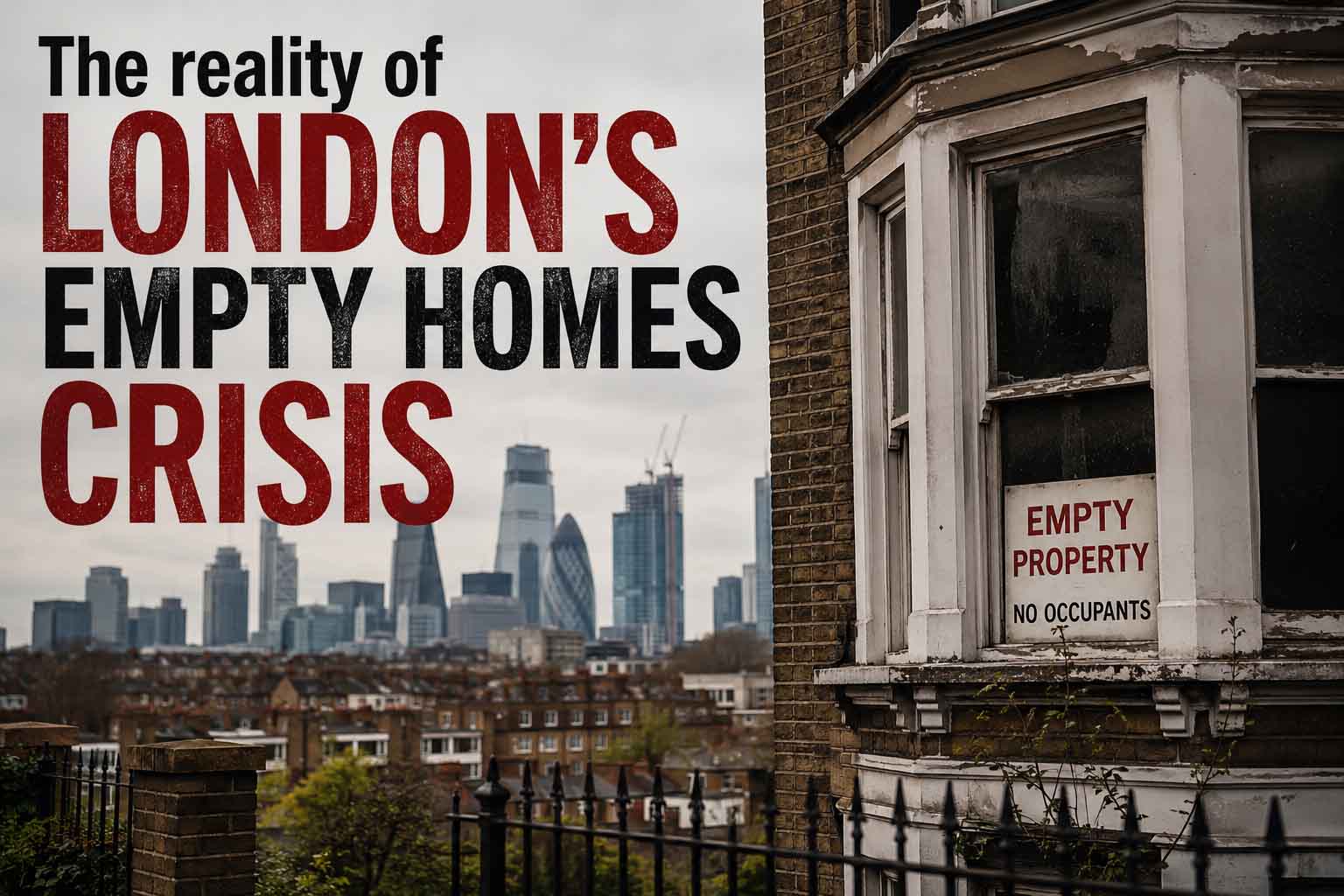
The Reality of London’s Empty Homes Crisis
More Than 105,000 Properties Standing Vacant
London’s worsening housing shortage is occurring alongside a sharp rise in the number of empty properties across the capital. New figures examined by the London Assembly show that there were 105,138 empty homes in London in 2025, equivalent to around one in every 37 homes, raising questions about whether existing housing stock is being used effectively. (London City Hall)
Empty homes have risen by 81% since 2016
When Sir Sadiq Khan became Mayor of London in 2016, there were approximately 58,096 vacant properties. By 2025 that number had climbed to over 105,000, representing an increase of 81%. The capital now has the highest number of empty homes recorded for more than two decades. (London City Hall)
Among these properties, almost 47,300 have been empty for more than six months, with long-term vacant homes increasing by 138% since 2016. More than half of all non-exempt empty homes in London have been unoccupied for at least six months. (London City Hall)
Council-owned homes also sitting empty
London has a larger proportion of vacant local authority housing than any other region in England. Around 12% of empty homes are owned by councils, and the number of council-owned properties standing vacant has risen by approximately 66% since 2016. (London City Hall)
Some of these homes are awaiting demolition or regeneration projects, while others remain empty because of delays in refurbishment and re-letting. Critics argue that this runs contrary to the London Plan, which states that boroughs should make efficient use of existing housing stock. (London City Hall)
Homes being built that Londoners cannot afford
Witnesses giving evidence to the London Assembly Housing Committee argued that some newly constructed homes remain vacant because they have been priced beyond the reach of most residents.
Chris Bailey of Action on Empty Homes described the situation as “bizarre”, saying London is building properties that many people cannot afford while demand remains strongest for genuinely affordable housing. According to campaigners, some new-build apartments have effectively become investment assets rather than homes. (The Standard)
The Assembly investigation also highlighted concerns over so-called “buy-to-leave” purchases, where properties are bought as investments and left unoccupied. Slow take-up of build-to-rent developments and student accommodation has also contributed to rising vacancy levels. (London City Hall)
Campaigners say empty homes offer a quick solution
Housing charity Shelter argues that renovating existing properties provides one of the fastest and most environmentally friendly ways to increase housing supply. Sam Bloomer, Shelter’s policy officer, told Assembly members that an empty property can be retrofitted and returned to use in around eight months. (The Standard)
Tara Clinton of Arup suggested that returning just 5% of London’s empty homes to occupation would produce a similar number of homes to the current annual rate of social housing construction, demonstrating the scale of the opportunity. (The Standard)
What powers do councils already have?
Local authorities possess a range of powers to tackle empty homes, including:
- Empty Dwelling Management Orders (EDMOs);
- Compulsory purchase powers;
- Enforced sales;
- Council tax premiums on long-term vacant properties;
- Improvement notices and other enforcement measures. (London City Hall)
However, campaigners argue these powers are often cumbersome and that boroughs need stronger backing from City Hall and central government.
Mayor’s response
City Hall has not commented directly on the Assembly’s criticisms, but the Mayor’s office has previously announced plans to refurbish up to 500 empty homes as part of its wider strategy to end rough sleeping by 2030. Critics contend that this would address only a tiny fraction of the 105,000 vacant properties currently recorded. (Reddit)
A symptom rather than the whole problem
Experts caution that empty homes are not a complete answer to London’s housing crisis. Many vacant properties are tied up in probate, renovation, legal disputes, regeneration schemes or sales processes, while others are unsuitable for immediate occupation. Nevertheless, with more than 340,000 households across London in housing need, campaigners argue that bringing even a modest proportion of empty properties back into use could provide thousands of additional homes without waiting years for new developments. (The Guardian)
Although empty homes alone will not solve London’s chronic shortage of housing, they represent a significant resource that many believe is currently being underused.